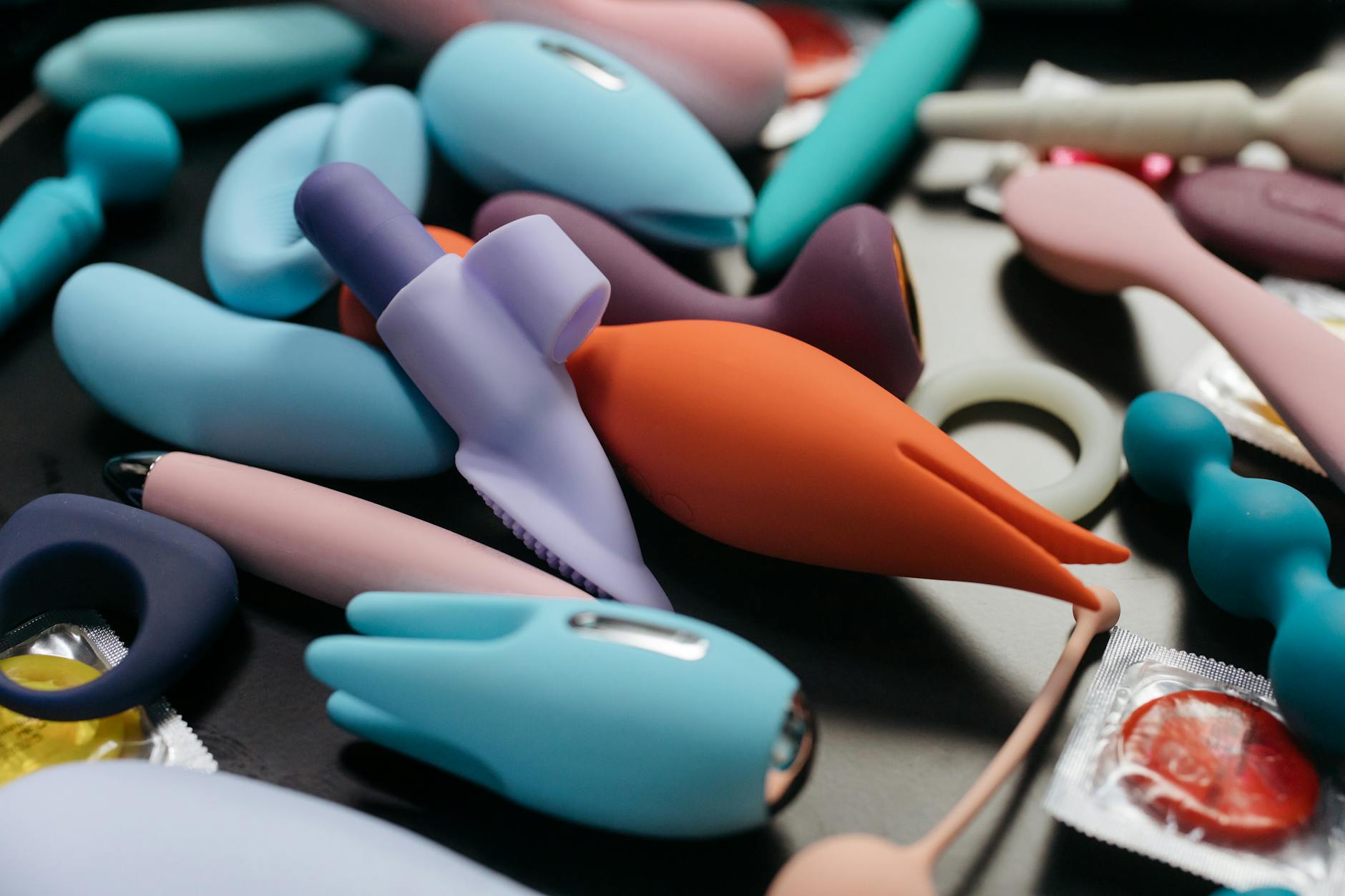
Let's talk about the 20-minute ramp-up nobody mentions
Here's what you've probably heard about arousal: it's supposed to be fast. A few minutes of foreplay, maybe a glance at your partner, suddenly you're ready. If that's you, great. If it's not, the silence around slower pleasure can feel like a personal failing.
It's not. Slow arousal is completely normal, and it's actually where a lemon clitoral vibrator becomes indispensable.
Why some bodies need more time
Arousal isn't one thing. It's a cascade of overlapping signals in your nervous system. Some people's nervous systems rev quickly. Others need a proper warm-up period. Neither is better. But the second group rarely hears it described as normal.
Stress, medication, hormonal cycles, relationship dynamics, and plain neurology all affect how fast arousal builds. If you're someone whose pleasure requires 20, 30, or even 45 minutes to reach full intensity, you're not broken. You're just wired differently. The problem starts when you try to rush your own body because you think you should be faster.
Lemon vibrators help because they do the work while you do the waiting.
The case for starting low and staying low
Most people think "vibrator" means "turn it up to high and see what happens." That approach torches a slow warm-up. If you need time to build, starting at the highest intensity is like trying to sprint a 5K. You burn out before you even get going.
The Lem's suction patterns work differently. Instead of relying on escalating intensity to build sensation, they create cumulative pressure and rhythm. You can stay on pattern one or two for 15 minutes without everything becoming numb, because the stimulation isn't wearing out your nerves through sheer force.
Start on the lowest pattern. Stay there. If your body is signaling that it wants more after 10 minutes, fine. Move up. But the goal during a slow warm-up isn't to reach maximum intensity. It's to let sensation gradually sharpen while your nervous system catches up.
Building layers instead of chasing peaks
When arousal is slow, the worst thing you can do is treat it like a race to orgasm. That's when you tense up, check the clock, and end up more frustrated than when you started.
Instead, think in layers. First layer: just touch. No vibrator yet. Five to ten minutes of your hands, your partner's hands, whatever feels good without any expectation of building toward anything. Your nervous system is already warming up, even if you don't feel it.
Second layer: bring in the lemon clitoral vibrator at a low pattern, but don't focus on the physical sensation. Focus on what you're thinking about. Fantasy, memories, a feeling you want to revisit. Your brain is the first erogenous zone. The vibration is just the vehicle.
Third layer: if you feel your body responding now, let the intensity shift slightly. Move to pattern two if pattern one stops creating novelty. But here's the key. If nothing is shifting after 20 minutes, don't panic. Some days your body isn't going anywhere. That's fine. The point is to notice what's happening, not force it into a predetermined timeline.
The rhythm that works with your nervous system
One reason lemon sexual toys feel different for slow arousal is the pulsing pattern. Instead of constant vibration, suction patterns create a rhythm. That rhythm gives your nervous system something to anticipate. Each pulse is like a gentle prompt, rather than relentless stimulation.
For people with slower arousal, this matters. Your system needs time to respond to input. A steady rhythm allows you to settle into the sensation rather than constantly adapting to change. Try alternating patterns every 5 to 10 minutes rather than staying locked on one. The variation keeps your body engaged without overwhelming your capacity to respond.
The mental game that slows you down even more
Here's the weird part. A lot of people with slow arousal aren't actually slow. They're just distracted by the fact that they're slow.
You start using your lemon vibrator, notice you're not wet yet or your body isn't responding the way the internet says it should, and suddenly your brain is half in the experience and half in a commentary track. "Why is this taking so long? Am I doing this wrong? Is something broken?" That internal conversation absolutely kills arousal.
This is where you need a different strategy. Before you even touch yourself, decide you're going to give yourself at least 15 minutes without judgment. That's not a commitment to orgasm. It's a commitment to not checking in with yourself about whether you're "ready yet." Just sensation. Just time.
If you're with a partner, tell them the same thing. "I need about 20 minutes to warm up. During that time, I'm going to try not to think about where this is going." Most partners are relieved to know what to expect instead of guessing whether you're enjoying it.
Building a toolkit that works for slow arousal
You don't need expensive toys. You need toys and strategies that don't punish you for your own pace.
A lemon adult toy like the Lem is good because the suction is gentler than high-speed vibration. It allows your tissues to respond without jarring. But also consider texture. A texture that creates novelty for your nervous system helps with slow arousal. After 15 minutes on suction alone, your nerves have adapted. Switching to a different type of stimulation for the next 10 minutes keeps your body engaged.
Water-based lubricant. Even if you're producing lubrication, adding more changes the sensation. It reduces friction, makes things smoother, and often signals to your nervous system that something shifted. That signal can help unlock the next phase of arousal.
Your own hands. People sometimes forget that toys are an addition, not a replacement. Your hands know your body better than anything else. Use them. Vibrators are there when your hands get tired or when you want a different type of sensation.
The partner conversation nobody has
If you're in a partnered situation and your arousal is slower than your partner's, you probably haven't explicitly discussed it. You've felt the pressure to "catch up," and they've maybe felt confused or rejected when you're not ready at the same moment they are.
Honestly though, if you can't say to your partner "I need about 25 minutes to warm up, and that's normal for me," you're both going to keep having this experience where someone's frustrated.
The conversation looks like: "My body works on a slower timeline. That doesn't mean something's wrong. It means I need consistent stimulation over time instead of intensity over a short period. Can we plan for that?" Most good partners will say yes immediately. Some need to hear that it's not about them. It's just how your particular nervous system is wired.
Using a lemon vibrator during this time gives your partner something to do too. It's not just you lying there waiting to get turned on. You're both participating in a rhythm that actually works for your body.
What happens after the warm-up
Here's the thing that surprised most people I've talked to about slow arousal. Once you actually stop fighting it and give yourself the time, the quality of sensation often becomes richer. You're not rushing toward an orgasm. You've already spent 20 or 30 minutes building, so your body is deeply engaged by the time anything climactic happens.
Orgasm after a slow warm-up often feels different. More full-bodied. Less urgent. Sometimes multiple waves instead of one peak. The experience is completely different from quick arousal, and most people prefer it once they let themselves have it.
FAQ
What if I'm still not aroused after 30 minutes with my lemon vibrator?
You might not be in the right headspace that day. Arousal requires both physical stimulus and mental engagement. If your brain is at work, worrying, or distracted, no amount of vibration is going to push through that. Try again another time. Or acknowledge that this particular session is about sensation and relaxation, not arousal, and that's fine too.
Is slow arousal a sign of low libido?
Not necessarily. Low libido means you don't want sex very often. Slow arousal means it takes time to get going, but once you do, you're fully engaged. Some people want sex frequently but take 20 minutes to warm up. Others want it rarely but get there instantly. They're separate variables.
Should I use my lemon clitoral vibrator solo first to figure out my pace?
Yes. Solo exploration is actually the best way to understand your own timeline without any pressure. No partner waiting. No sense of urgency. Just you and your body figuring out how you actually work. This information is gold when you're trying to communicate about partnered intimacy.
Why does the suction pattern on a lemon vibrator feel better for slow arousal than straight vibration?
Vibration is constant. Your nervous system adapts to it quickly. Suction creates intermittent pressure and release. That rhythm gives your system something to anticipate and respond to. It mimics more closely how manual stimulation feels. That pulsing quality helps with slow arousal because your body stays engaged instead of going numb.
What if my partner thinks slow arousal means I'm not attracted to them?
You need to say clearly: slow arousal is not about attraction. It's a nervous system speed. You can be wildly attracted to someone and still take 25 minutes to show it physically. Slow arousal is actually very common in long-term relationships where there's emotional safety. When you're relaxed, your nervous system doesn't need to rush.
Can meditation or breathing help with slow arousal?
Absolutely. Slow, deep breathing activates your parasympathetic nervous system, which is where arousal actually happens. If you're tense or shallow-breathing, your nervous system is in fight-or-flight mode. You won't arouse. Three minutes of intentional breathing before any touching can completely shift your capacity. Try it.
Stop fighting your own timeline
Slow arousal isn't a flaw you need to fix. It's information about how your particular nervous system works. Once you stop seeing it as a problem and start seeing it as a pattern you can work with, everything shifts.
A lemon suction vibrator is useful because it allows you to build pleasure gradually without the intensity overtaking your capacity to respond. Your hands matter. Your brain matters more. And most importantly, your pace is already exactly right. You just had to stop fighting it to notice.
If you're struggling with pleasure dynamics in your relationship, or if you want personalized guidance about what's working and what isn't in your intimate life, reach out to talk through it. That's what I'm here for.