
Let's talk about the disconnect
There's a particular kind of loneliness that happens when you're in your own body but not quite inhabiting it. Depersonalization and dissociation are clinical terms for something that feels less like a diagnosis and more like watching yourself from three feet away. You see your hand reach for something. You notice pleasure starting to build. But the signals don't quite land. It's like the volume on sensation got turned down, and you're not sure how to turn it back up.
Here's the thing: pleasure is the first thing to fade when your nervous system is in self-protection mode. Your body isn't broken. It's doing exactly what it's been trained to do. And there are concrete, grounded ways to signal safety back into the system so that sensation can return.
Why dissociation kills arousal
When you're dissociated, your vagus nerve (the major player in your parasympathetic nervous system) is essentially working overtime to keep you calm by creating distance between you and your feelings. This is useful when you're in genuine danger. It's less useful when you're trying to have an orgasm and your brain has decided you're still in crisis mode.
The cascade is straightforward. Dissociation dampens proprioception, which is your brain's sense of where your body is in space. That makes it nearly impossible to feel pleasure clearly because pleasure requires you to be present and aware of sensation. No presence, no signal. The vibrations from a lemon vibrator can feel like they're happening to someone else's body, not yours.
The second problem is that dissociation disrupts the feedback loop between your brain and your genitals. Normally, when you touch your clitoris or use a vibrator, your sensory cortex lights up and sends that signal straight to your brain's pleasure centers. When you're dissociated, that signal travels but arrives muted, like a radio station broadcasting from far away.
How lemon vibrators are different for a disconnected body
Lemon vibrators, specifically the air-suction design of clitoral vibrators like the Lemon, work differently than traditional vibrators in one crucial way: the suction mechanism creates a broader, more diffuse sensation that doesn't require as much sensory focus to feel. Traditional vibrators often feel like a single point of stimulation. If you're already struggling to feel anything, a single point of focus can make the disconnection worse.
The suction of a lemon clitoral vibrator spreads sensation across a larger area of tissue, which means your nervous system gets more sensory input to work with. More input means higher likelihood that something will break through the static.
Beyond the mechanics, using a lemon vibrator when you're dissociated serves a second function: it becomes a grounding object. You're holding it. The weight is real. The vibration is real. Your hand knows it's there. When your brain starts to float away, the vibrator becomes an anchor point.
The grounding protocol before you even start
Dissociation responds to grounding. Before you touch your body sexually, you need to bring your nervous system back into the present moment. This isn't meditation or breathing exercises (though those help). This is tactical sensory input.
Start with temperature and texture. Hold an ice cube in one hand while the other hand rests on a soft blanket. Notice the contrast. Your brain can't dissociate well when it's getting competing sensory input. Do this for two minutes.
Name five things you can see in your room right now. Not in a floaty way. Look at them. Colors. Textures. Specific details. This activates your visual cortex and pulls your awareness back into present space.
Play a song you love at moderate volume. Listen to the bass line. Feel the vibrations if the speakers are close. Sound is a powerful reentry route when you're dissociated.
Now, and only now, consider touching yourself. Your nervous system has started to remember that it's safe to be in your body.
Building sensation in layers
Don't go straight to the lemon vibrator on the highest setting. That's like showing up to physical therapy the day after you broke your leg and expecting to run a marathon.
Start with your hands. Touch your collarbone. Notice how it feels. Move to your forearm. Your wrist. Your inner arm. You're literally reintroducing yourself to your own body. This takes time. Some people need 10 minutes of this. Some need 30. There's no rush.
Then introduce the vibrator on the lowest setting. Don't aim it at your clitoris yet. Run it across your inner thighs. Your pubic bone. Your lower abdomen. The goal is sensation, not stimulation. You're teaching your nervous system that this object equals safety, not pressure to perform.
After five minutes of this gentle mapping, you can move the lemon vibrator closer to your clitoris. Still low setting. Still no expectation of orgasm. You're looking for the moment when you think, "Oh, I feel that." That moment is the win. Not the orgasm. That moment.
Managing the float when it happens
Honestly, you might still dissociate even with all of this preparation. That's okay. It doesn't mean you're failing.
When you notice the disconnect happening mid-session, stop the vibrator. Do a quick reset: feel the weight of the vibrator in your hand. Feel your back against whatever surface is supporting you. Notice your breathing. Then resume. You might need to pause and reset three or four times. That's completely normal.
Some people find that talking during sex (even if it's just quiet narration of what they're feeling) helps. "My clitoris is responding. I feel warmth spreading." The act of using language pulls your prefrontal cortex online, which is the part of your brain that knows you're safe and you're here.
Others find that having a hand or grounding object held by a partner helps immensely. If you have someone in your life you trust, having them hold your hand while you use a lemon vibrator can be the difference between floating and staying tethered.
Timeline and patience
Rebulding sensation after dissociation isn't a one-session fix. For some people, it takes weeks. For others, months. Your brain is literally relearning that pleasure can coexist with safety, and that takes repetition.
My recommendation is to use your lemon vibrator three times a week, but with the goal of sensation, not orgasm, for at least two weeks. Lower your expectations. Way lower. A good session is one where you felt grounded for 70 percent of it. An amazing session is one where you had a moment of clear sensation.
Orgasms will return. They usually do, once your nervous system trusts that the coast is clear.
When to bring a partner in (if you want to)
Some people find that partnered sex is easier to feel during dissociation because there's another person's presence anchoring you. Others find it more disorienting. There's no rule here.
If you do want to involve someone, the first conversation isn't about sex. It's about what you're experiencing. "Sometimes I feel disconnected from my body during sex. I'm working on that. Here's what helps." That honesty opens the door for them to support you in a way that actually works.
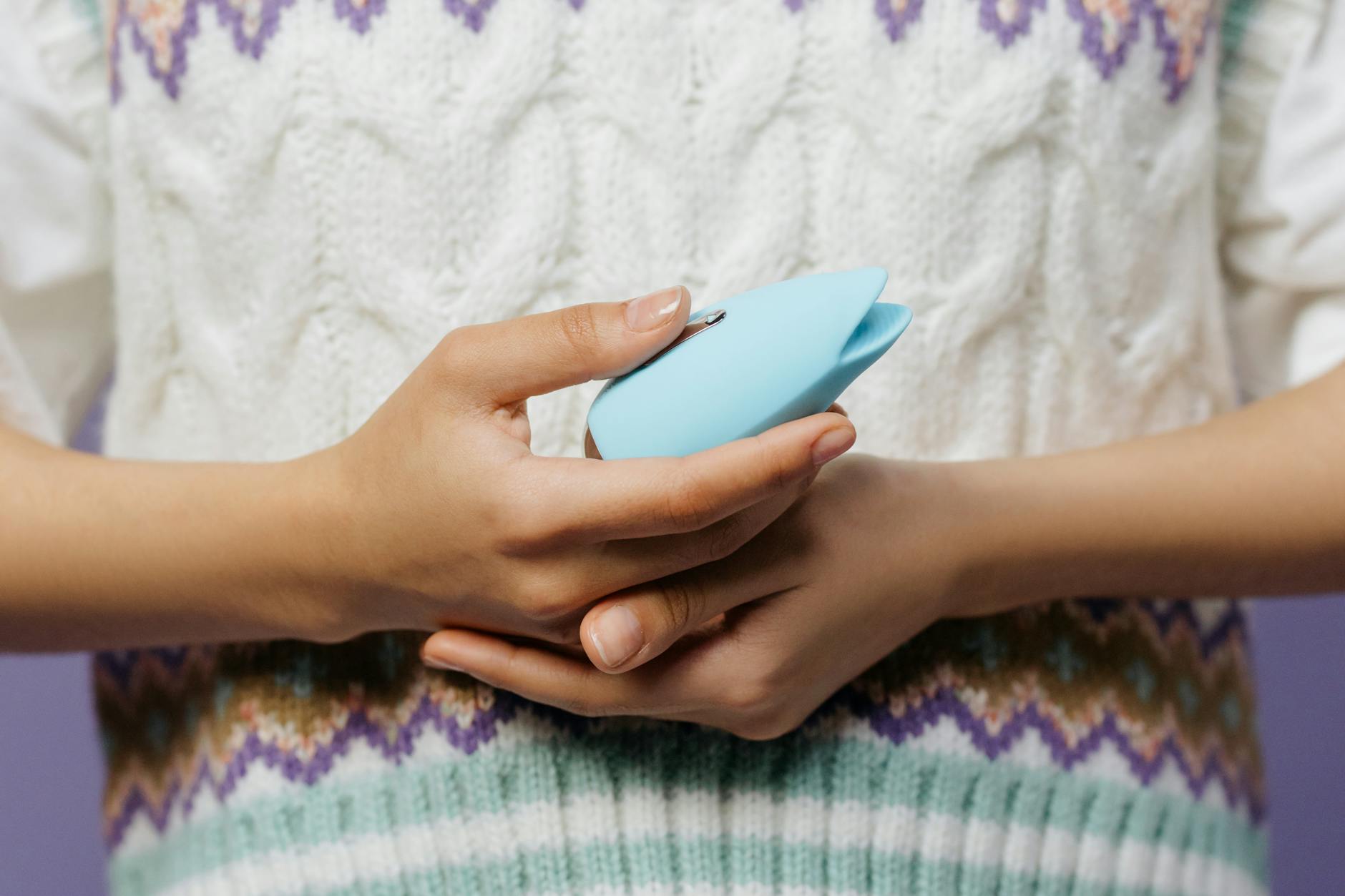
Photo by cottonbro studio on Pexels
Using a lemon vibrator together can actually speed up reintegration because you're getting external sensory input, touch from your partner, and the vibration all at once. That's a lot of sensory channels competing for your brain's attention, which can actually help override dissociation.
The role of therapy alongside the vibrator
I want to be direct here: a lemon vibrator is a tool, not a cure. If your dissociation is tied to trauma, anxiety, or a neurological condition, you need to work with a therapist or doctor alongside this pleasure work.
What the vibrator does is create a safe experimental space where you can practice being present. It's like physical therapy for sensation. But the underlying nervous system dysregulation benefits from professional support.
If you're on medications that contribute to dissociation or numbness, that's a conversation with your prescriber. Some adjustments can help without losing the benefits of the medication itself.
Expect setbacks (and plan for them)
Some weeks you'll feel mostly present. Other weeks you'll feel like you're back at square one. That's not failure. That's how nervous systems heal. They don't move in a straight line.
The beauty of using a lemon vibrator for this work is that the tool is always there when you're ready to try again. No judgment. No performance pressure. Just a chance to practice being in your body for a few minutes.
Reconnection is possible. Your body hasn't forgotten how to feel pleasure. Your nervous system just needed to remember that it's safe.
Frequently asked questions
Can dissociation during sex permanently damage my ability to orgasm?
No. Dissociation disrupts sensation temporarily, but it doesn't cause permanent nerve damage or neurological changes. Once your nervous system feels safe enough to stop creating that protective distance, sensation returns. It might take weeks or months, but the capacity is still there.
Is using a vibrator when dissociated actually helping, or am I just reinforcing numbness?
You're helping. The key is changing your goal. If you're using the vibrator expecting an orgasm and that pressure reinforces dissociation, then yes, that's counterproductive. But if you're using it to gradually rebuild sensation and practice presence, you're literally retraining your nervous system. Each session where you feel even a moment of clarity is progress.
Why does dissociation happen during sex specifically for some people?
Sex activates both arousal and vulnerability, which can trigger dissociation in people whose trauma or anxiety is linked to physical intimacy or loss of control. Your body is trying to protect you from feeling too much. It's an overshoot of a useful survival mechanism. As you work with a therapist and practice grounding, that oversensitivity usually recalibrates.
Can I use a lemon clitoral vibrator if I'm completely numb down there?
Yes, but with adjusted expectations. Start with the vibrator on the lowest setting and focus entirely on the sensation of holding the device, not on what you're supposed to feel. Sometimes numbness breaks through when you stop looking for a specific sensation. After a few sessions of gentle exploration, feeling often returns. If there's zero sensation after several weeks, that's worth discussing with a doctor to rule out other causes like nerve damage or medication side effects.
How do I know if my dissociation is severe enough that I shouldn't be using a vibrator alone?
If dissociation causes you to lose time, forget where you are, or feel unsafe in your own body, get professional support before experimenting with pleasure tools. A therapist or trauma-informed doctor can help you stabilize your nervous system first. A lemon vibrator can be part of the healing once you have professional guidance.
Does dissociation during sex mean the relationship is the problem?
Not necessarily. Sometimes dissociation happens with every partner because it's rooted in your own nervous system's patterns, not the relationship dynamic. Sometimes it's specific to one partnership because of how that person shows up. And sometimes it's both. The work with a lemon vibrator and a therapist helps you figure out which is which, because you're learning to feel your own body first, independent of a partner's presence.
Moving forward
Reconnecting with your body after dissociation is slower, quieter work than the highlight reel of pleasure you might see elsewhere. There's no quick fix, and that's actually good news. It means you're building real, sustainable sensation instead of chasing a temporary high.
Start small. Use your lemon vibrator for five minutes with zero pressure. Notice what you feel. Celebrate the smallest wins. Your nervous system is learning that pleasure can coexist with safety. That's the foundation everything else builds on.
If you want to talk through your specific situation or explore other approaches, we're here to help. Get in touch at /contact.