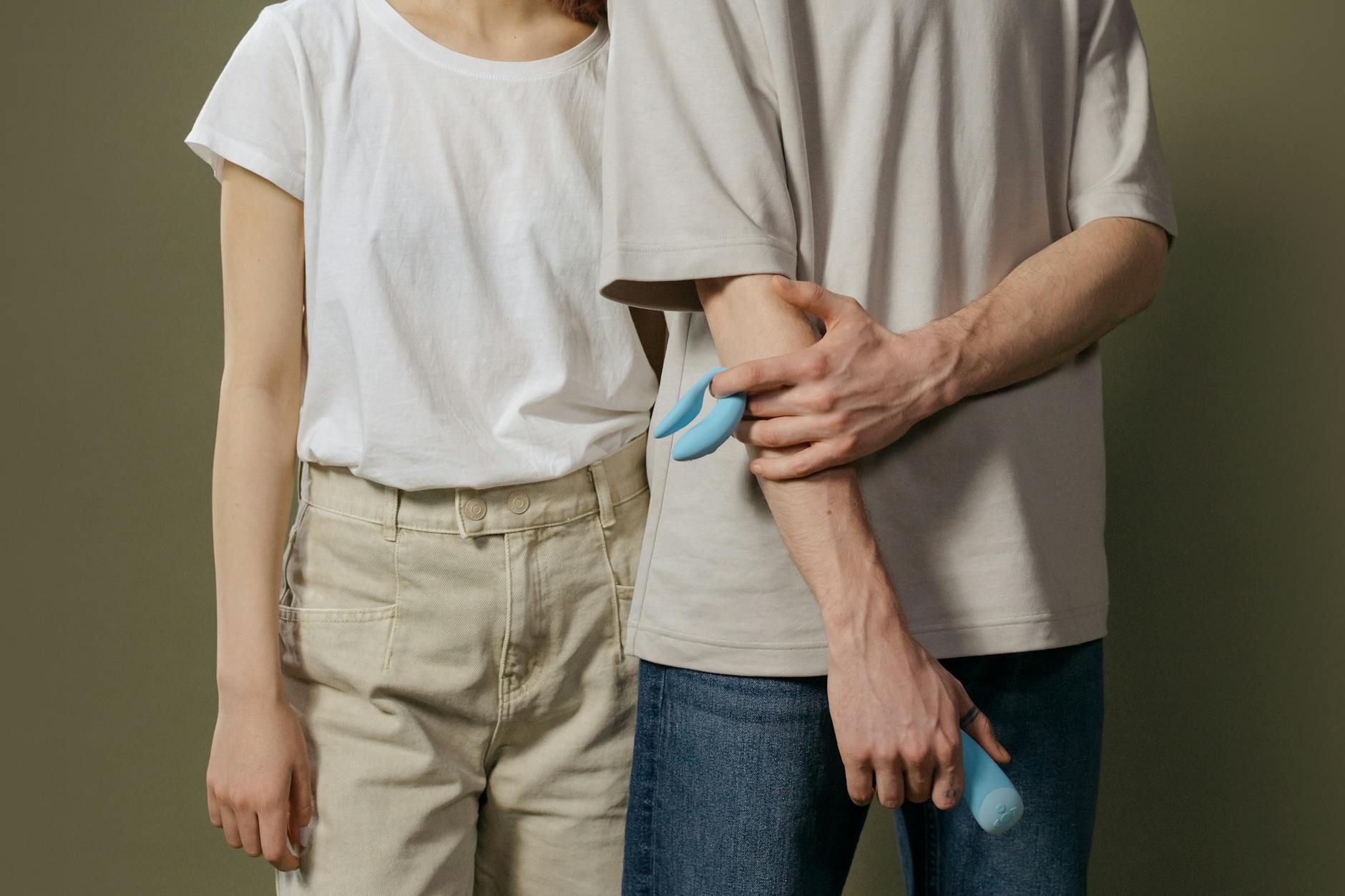
Let's start with the real problem
Pain during sex doesn't just hurt. It breaks the feedback loop between your brain and body. Your nervous system learns to brace for pain instead of open to pleasure. Orgasm becomes impossible because the pathway is blocked, not because your body has forgotten how.
Here's what most people get wrong: they keep trying the same thing. Same position, same pressure, same hope it'll feel different. It won't. You need to change the input entirely.
A lemon clitoral vibrator does this. Not because it's magic, but because it bypasses the pain trigger and stimulates the nerve-dense clitoris directly, without pressure on the painful area. This lets your nervous system learn pleasure again.
Why lemon vibrators work differently for pain
When penetration hurts, two things are happening at once. First, the physical tissue involved is either inflamed, too tight, or underlubricated. Second, your brain has learned to anticipate pain. Both need to shift.
The lemon clitoral vibrator (and other clitoral suckers like it) stimulate through gentle suction and patterns rather than direct friction. This means:
No pressure on the painful area. You're focusing all stimulation on the clitoris, nowhere near the site of pain. Your nervous system can relax.
Faster arousal buildup. Clitoral stimulation is more direct than penetrative stimulation. Your arousal curve steepens, which means blood flow to the pelvic area increases faster. Better lubrication happens naturally, and faster.
Pattern variety. The Lem and similar lemon vibrators offer multiple intensity levels and patterns. This lets you stay in control and adjust in real time, which rebuilds your sense of agency.
Orgasm without penetration risk. Many people with pain during sex report that clitoral orgasms feel safer, more reliable, and more intense than anything involving penetration. Start there. Build confidence there.
The actual setup that works
Let's walk through a session that sidesteps pain entirely.
Before you touch anything, manage the mindset. Tell yourself this session is not about "trying to make penetration work." It's about discovering what feels good. Full stop. That mental shift from goal-oriented to exploration-oriented changes everything neurologically.
Build arousal first, separately. Spend 10-15 minutes on non-genital touch. Massage, kissing, whatever activates your arousal without touching the painful area. This is not foreplay to something else. This is the main event.
Use plenty of water-based lubricant on the Lem itself. Even though you're not touching the painful area, lubrication on the toy reduces friction and makes the sensation glide rather than tug. This matters.
Start on the lowest setting (pattern 1). Let your body adjust to the sensation. Many people skip this step and jump to intensity 4 or 5. Don't. Low and slow builds confidence and arousal without overwhelming.
Explore the full contact, not just the tip. The hood of the clitoris (the tissue covering the clitoral head) is less sensitive than the head itself. Angle the lemon clitoral vibrator to cover more surface area. Some women find the broad stimulation more comfortable than a pinpoint sensation.
Stay there until orgasm, or until you want to stop. You don't need penetration to have a complete sexual experience. Many people with pain during sex find that consistent clitoral orgasms are more satisfying than the penetrative experience ever was.
When you're ready to add penetration back in
This is the tricky part. Most people rush this step and re-trigger the pain cycle.
Wait until you've had several successful clitoral orgasms with the lemon vibrator solo or with a partner. Once you've proven to your nervous system that pleasure is possible, then think about reintroducing penetration.
When you do, try this sequence.
Start with clitoral stimulation on the Lem. Build to near-orgasm. At that peak moment, when your arousal is highest and your pelvic floor is maximally relaxed, consider very shallow penetration with a small dildo or finger. Do not push for fullness. Do not aim for depth. Just enough to register.
If pain appears, stop. Don't push through. Go back to clitoral stimulation until orgasm. Your job right now is to retrain your nervous system that gentle internal sensation can be okay, not painful.
Many people find they never want to go back to penetration as the main event. That's fine. Your pleasure is the goal, not replicating what came before.
The medical piece you shouldn't skip
If pain during sex persists beyond a few weeks, or if it's severe, see a gynecologist or pelvic floor specialist. Pain during sex can signal endometriosis, pelvic floor dysfunction, vulvodynia, or other treatable conditions. A lemon clitoral vibrator is a pleasure tool, not a medical treatment.
That said, pelvic floor physical therapy paired with clitoral vibrator exploration often works together beautifully. The therapist helps release tension. The vibrator helps rebuild the pleasure pathway. Both are needed.
Talking to your partner through this
If you have a partner, this shift in how you approach sex will affect them too. Head off the misunderstanding now.
"I want to focus on what feels good instead of what I think should feel good." This isn't rejection. It's clarity.
"I'm going to use the Lem more often because my body responds to it." Not instead of partnered sex. Alongside it.
"I might not want penetration for a while, and that's not about you." This is true and worth saying directly.
Partners often feel rejected when pain appears. Reframe it: pain during sex isn't about your partner's desirability. It's about your nervous system protecting you. Using a lemon clitoral vibrator is your way of saying yes to pleasure on your own terms. Most partners find that incredibly hot.
The patience piece is the actual work
Rebrain your nervous system takes time. You might see shifts in two weeks. More likely, real change happens over two to three months of consistent, pleasurable clitoral exploration.
Don't treat each session as "will this finally fix me?" Treat it as "tonight I'm going to feel what my body enjoys." That mindset shift is 80% of the work.
Your clitoris has roughly 8,000 nerve endings. Your vaginal canal has far fewer. When pain has blocked the vaginal pathway, your clitoris becomes not just an alternative but often a superior route to pleasure. Lean into that.
People also ask
Can a lemon vibrator actually reduce pain sensitivity over time?
Not directly, but it does something almost as valuable: it retrains your nervous system to associate genital touch with pleasure instead of pain. When your brain consistently experiences safe, pleasurable clitoral stimulation, the fear response around genital touch softens. Over time, you may find that the painful area feels less threatened. This isn't numbing. It's nervous system recalibration.
Should I use a lemon clitoral vibrator if penetration hurts but I still want to try?
Absolutely. Start with the clitoral vibrator solo until you've had multiple orgasms. Build that confidence. Then, if you want to explore penetration alongside it, bring the vibrator with you. Many couples use the lemon vibrator during partnered sex specifically to shift the focus to clitoral pleasure while penetration happens at low intensity or shallowly. The vibrator becomes the main event. Penetration becomes secondary.
How often should I use the lemon vibrator if I have pain during sex?
As often as you want. Daily is fine. The more often your nervous system experiences pleasure without pain, the faster the retraining happens. Some people use the lemon clitoral vibrator multiple times a week as their primary form of sexual expression. That's complete, valid, and often more satisfying than penetration-focused sex ever was.
Is there a risk of becoming dependent on the lemon vibrator if I use it for pain?
No. This is a myth that keeps people in pain. Your clitoris doesn't "get lazy." Vibrator use doesn't rewire you. What happens is the opposite: regular, pleasurable stimulation strengthens your capacity for arousal and orgasm. Many people who address pain through lemon vibrator use find that they're more interested in sex overall, not less.
Can I use a lemon vibrator during partnered sex if I have pain?
Yes, and many couples find this is the turning point. Let your partner know you want to use the lemon clitoral vibrator during sex. Use it while they're inside you, or use it as foreplay to build your arousal before they enter, or use it as the main event while they provide other touch. The options are endless. Communication matters. "I want to use this because my body responds to it and I want to feel good" is not the same as "you're not enough." Say it directly.
What settings work best for pain-related sensitivity?
Start on the lowest pattern and intensity. Many people find that lower intensities actually feel more pleasurable than high ones when pain is a factor, because gentler stimulation allows sustained focus and deeper arousal. You're not trying to overpower the pain. You're building pleasure from the ground up. Pattern 1 at intensity 1 or 2 is often the sweet spot. Let your body guide you up from there.
The actual bottom line
Pain during sex is solvable. Not always instantly, and not always through penetration alone. But solvable.
A lemon clitoral vibrator is a direct, effective tool for rebuilding pleasure when pain has blocked the path. Use it without shame. Use it without apology. Your pleasure matters more than the idea of what sex should look like.
Start slow. Stay patient. Let your body learn again that touch can feel good. When you've built that foundation, everything else becomes possible. If you want to explore more ways to rebuild intimacy after pain or other shifts, the guides on communication and pelvic floor recovery are worth your time.