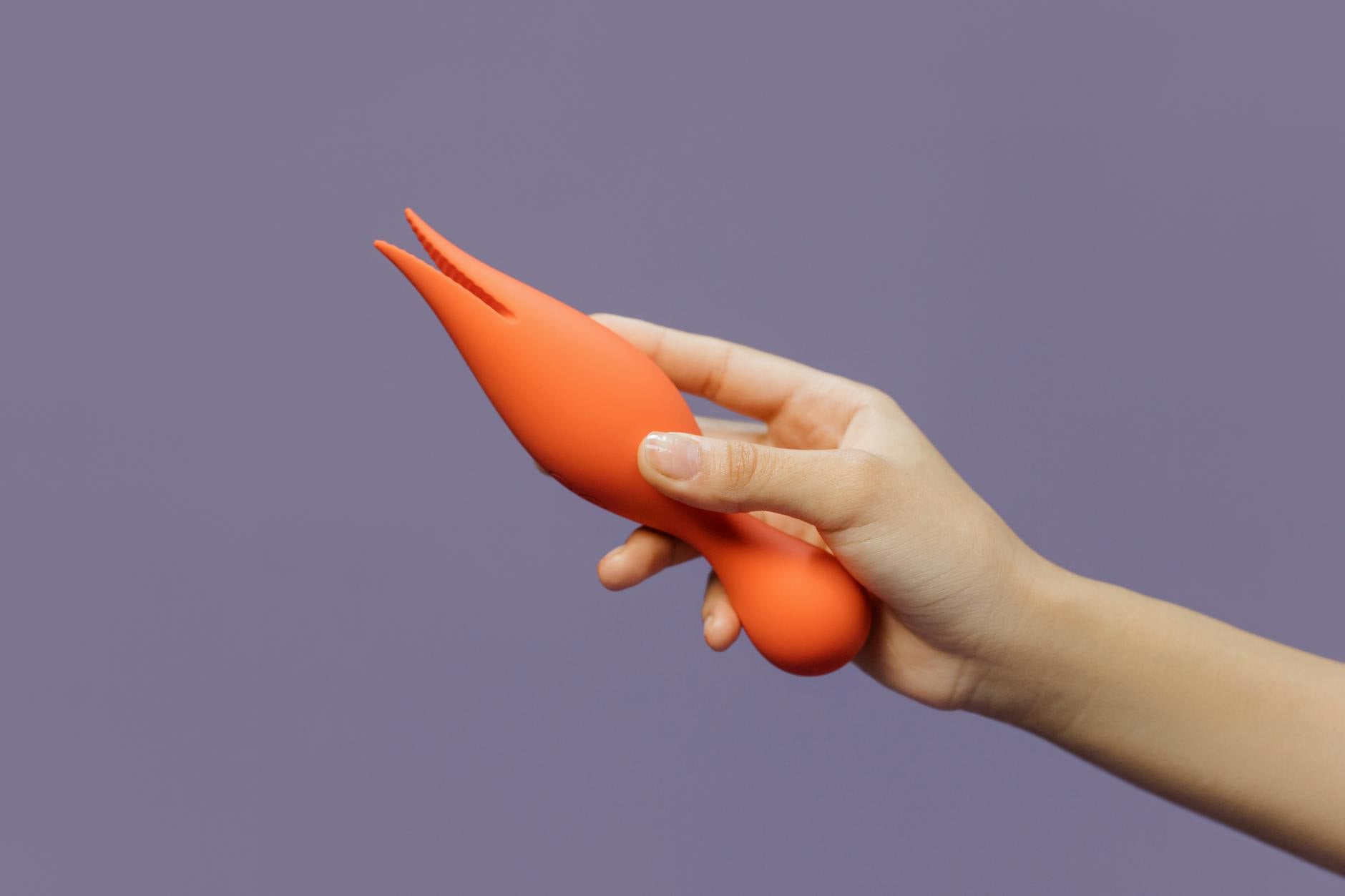
The performance trap nobody names
Here's the thing that doesn't get talked about enough: pleasure becomes a job when you start measuring it. Orgasm turns into a checkpoint. Arousal becomes a metric you're either hitting or failing. And the moment you're grading your own experience, you've already left the room.
I see this constantly in my practice. People come in saying "I can't come fast enough" or "I take too long" or "my partner gets tired" or even "I don't know if what I'm feeling counts." None of that is about the body. All of it is about the story running underneath. And that story makes genuine pleasure nearly impossible.
The good news is that lemon vibrators, particularly tools like a lemon clitoral vibrator, are uniquely suited to breaking this pattern. Not because they're magic. But because they change the physics of sensation in a way that forces you to slow down.
Why performance pressure kills sensation
When you're focused on reaching a destination, your nervous system tightens. Blood flow narrows. Attention scatters between what you're feeling and whether you "should" be feeling it faster. That scattered attention is the enemy of pleasure. Orgasm requires focus, but not the kind of focus that's watching the clock.
Performance pressure typically comes from three sources. First, there's the cultural script: sex should follow a linear path, climax quickly, and wrap up. Second, there's partner pressure, real or imagined: you're taking "too long" or they're getting bored. Third, and most insidious, is internal pressure. You've internalized the narrative that your body should respond a certain way, and anything that deviates is wrong.
All three converge into one feeling: you need to hurry up and finish.
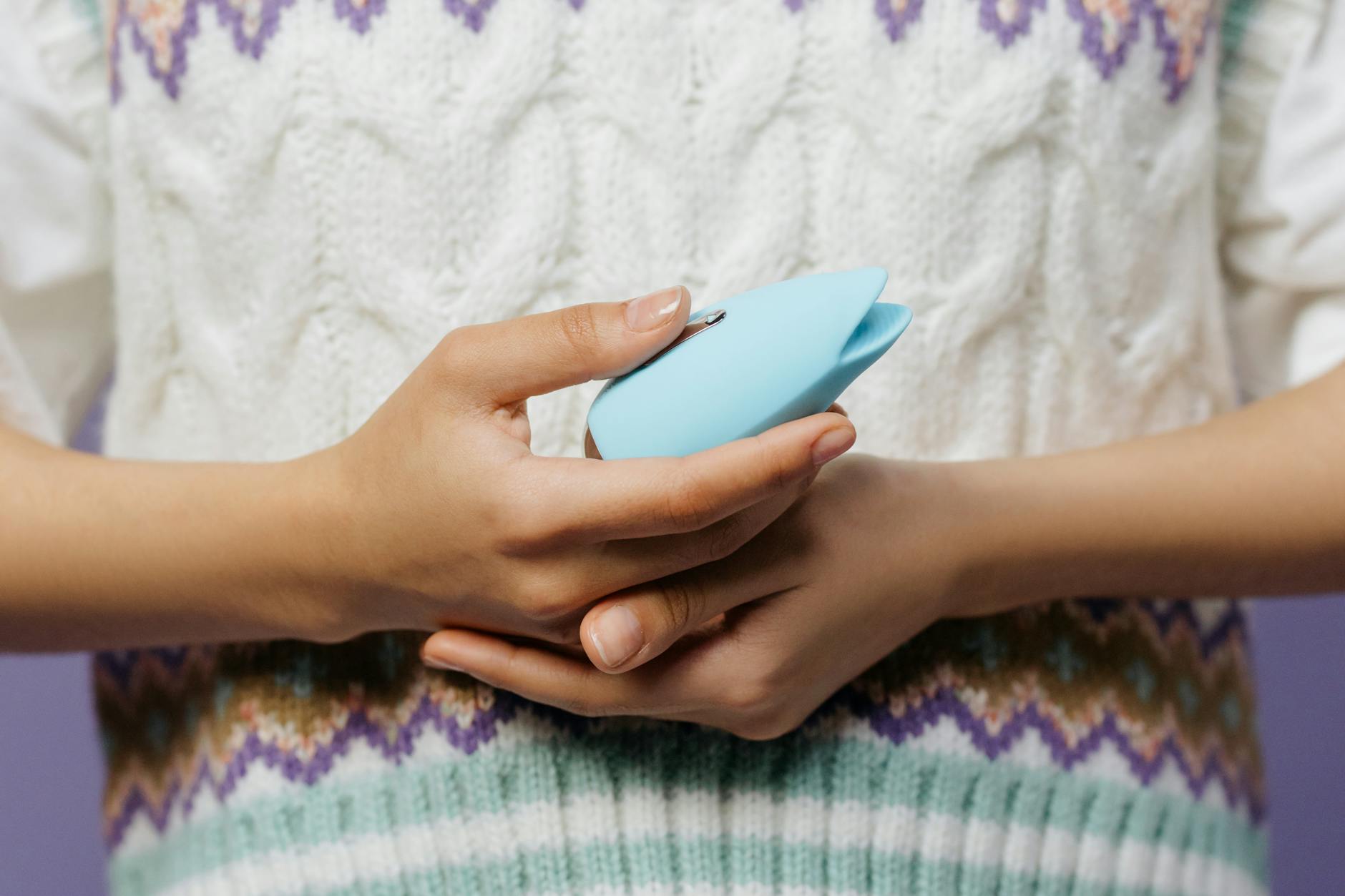
Photo by cottonbro studio on Pexels
How lemon vibrators change the equation
A lemon sexual toy works differently than the porn version of sex everyone's seen. Instead of intensity as the main event, you get precision. Air-suction stimulation, which is what lemon clitoral vibrators deliver, triggers nerves without the brute-force friction that can feel goal-oriented or even clinical.
That shift matters psychologically. When you're using a tool that creates gentle, consistent sensation, your brain stops bracing for intensity. The pressure to "perform" flips into permission to explore. You're not racing toward some finish line. You're discovering what different patterns feel like, how your body responds to rhythm changes, what happens when you just sit with a sensation instead of chasing it.
That's not incidental. That's the whole game.
The three-step reset for pleasure without pressure
If you've spent months or years treating pleasure like a task, you need to retrain your nervous system. Here's the framework I recommend.
Step one: Set a timer for exactly 15 minutes. Then set zero expectations. You're not aiming for an orgasm. You're not even aiming for arousal. You're literally just exploring what sensation feels like when there's no deadline. Use a lemon vibrator on patterns one or two. Low intensity. You might feel turned on. You might feel nothing at all. Both are correct. The goal is to practice pleasure without judgment, which sounds simple and is actually radical.
Step two: Notice when the pressure returns and name it. Halfway through, your brain will probably whisper "am I getting anywhere" or "this is taking forever" or "should I try something else." That's not failure. That's the old script trying to reassert itself. Notice it. Say "yep, there's the performance anxiety again." And then return to sensation. This isn't meditation, but it uses the same muscle: noticing thought, choosing to return to body.
Step three: Extend the timeline and release the outcome. Once you've done two or three 15-minute sessions, extend to 20 or 25 minutes. And here's the critical part: you're not extending because you're "trying harder." You're extending because the experience itself became worth the time. When pleasure is no longer a task you're checking off, time disappears. That's how you know you've left the performance trap.
What happens when pleasure stops being a goal
Once you decoupling pleasure from orgasm, some interesting things start to happen. First, you might discover that orgasms actually come more easily because you stopped trying so hard. That's not luck. That's your nervous system finally relaxing.
Second, you might realize you like sensation that never leads anywhere. Maybe you enjoy five minutes of gentle lemon clitoral vibrator stimulation in the afternoon with no follow-up. Maybe you like the feeling of arousal without needing it to resolve. These aren't failures. They're data about what your body actually wants, which is different from what you thought it was supposed to want.
Third, you might find that your relationship with your body actually improves. You're no longer at war with your timeline or your responses. You're not comparing yourself to some imaginary standard. You're just experiencing what's there.
That shift ripples outward. If you can stop performing in bed, you might notice where else you're performing. In conversation. In your career. With your family. That's how a lemon vibrator becomes not just a tool for pleasure, but a tool for permission.
The partner conversation when timing is the issue
If performance pressure is coming from a partner (or from worry about a partner), this needs a conversation that happens outside the bedroom. Not during sex. Not in the moment. On a regular Tuesday over coffee.
The conversation isn't "I need you to be patient." That's still framing it as your body taking too long. The real conversation is "pleasure for me works differently than I thought. Sometimes it's about the experience, not the outcome. I need us to stop measuring by the clock."
If your partner is willing to try a different framework, you might explore pleasure together where neither of you is aiming for anything. Using a lemon sexual toy becomes a shared experience of sensation rather than a performance you're both grading. That changes everything.
If your partner isn't willing to shift, that's important information too. But that's a different conversation, and it belongs in couple's counseling, not here.
When intensity becomes a pressure tool (and why less is more)
One thing I notice with people trying to break the performance pattern: they often try to fix it with more intensity. If orgasms feel far away, the instinct is to crank the vibrator to level five or six.
Don't. That's the performance trap wearing a different mask.
Start with the gentlest setting on your lemon clitoral vibrator. Seriously. Level one. Level two if one feels like nothing. The goal is sensation you can feel without it being so strong that you're chasing it. Think of it like hearing music in another room versus hearing a siren. You want the former. The latter contracts your nervous system, which is the opposite of what you need.
If you're genuinely numb or have low sensation, that's a different issue that might involve lubrication, positioning, or medical factors. But if you're feeling pressure, the answer is always less intensity, not more.
The shift happens quietly
One of my clients described it this way: "I realized I had been treating my orgasms like a job performance review. Pass or fail. And then I used the lemon vibrator with absolutely no expectations, and I remembered what it felt like to just enjoy something without grading it."
That's the entire game. Not bigger orgasms. Not faster responses. Just permission to experience pleasure as an experience, not as an outcome you're being measured on.
When you stop performing, you start feeling. And that's when everything changes.
People also ask
Why do lemon vibrators feel less goal-oriented than other toys?
Air-suction stimulation, which is what lemon clitoral vibrators deliver, creates consistent, gentle sensation that doesn't require the same internal effort as friction-based toys. There's nothing to push against or chase. You're not doing anything to reach an orgasm. You're just existing in sensation. That permission to be passive, rather than active, is what breaks the performance cycle.
Can I use a lemon sexual toy if I feel numb to pleasure?
That depends on the source of numbness. If it's psychological (performance pressure, anxiety, medication side effects), then yes, a lemon vibrator combined with the pressure-free framework in this article can absolutely help. If it's neurological or hormonal, you might need medical support first. Start with your doctor, then layer in the pleasure work.
What if my partner thinks I'm taking too long?
That's a values conversation, not a mechanics conversation. If your partner is unwilling to embrace pleasure as an experience rather than a goal, you have a relationship problem that goes beyond any toy. Couples therapy can help reframe this. In the meantime, solo pleasure without an audience or a clock is the safest place to practice letting go of performance.
How long does it take to stop feeling like pleasure is a performance?
Usually two to three weeks of consistent, pressure-free exploration. Your nervous system remembers the old script for a while, but once your body has felt what genuine relaxation into sensation is like, it stops buying the performance narrative as easily. Consistency matters more than intensity.
Is it normal to not want an orgasm every time?
Completely normal. Once you untangle pleasure from performance, you might discover that sometimes you want full arousal and orgasm, sometimes you want gentle sensation with no follow-up, and sometimes you want nothing at all. All three are valid. The performance trap says you "should" always want the same thing. You don't.
Should I tell my partner about using a lemon vibrator for this?
That's your call. If you're in a relationship and want to rebuild physical intimacy, transparency usually helps. If you're solo, there's no obligation to tell anyone. The private work of learning to experience pleasure without performance pressure is valuable regardless of who knows about it.
The door opens quietly
Performance pressure doesn't announce itself. It sneaks in as helpful advice, as concern, as love. By the time you realize you're racing toward an orgasm instead of experiencing it, you're already trapped in the pattern.
Breaking it doesn't require anything complicated. It requires a lemon clitoral vibrator, 15 minutes, and permission to stop being productive about pleasure. Once you remember what it feels like to just feel, you can't unfeel it. And that changes everything else.
If you want to explore this further, I'm here to help. Reach out anytime.