
Let's name the fear first
You're thinking about using a lemon clitoral vibrator. Maybe you've already bought one. But there's a voice in your head saying: What if your partner thinks it means they're not enough? What if they feel threatened, insulted, or like you're checking them out? What if this ruins things?
That fear is real. It's also incredibly common, and it's almost never based on how your partner will actually react. But it keeps people from using the tools that would transform their pleasure anyway.
The hidden belief underneath
Here's what I've noticed after years of working with couples: the nervousness about a partner's judgment usually signals something deeper. It's not really about the vibrator. It's about whether you believe your pleasure is worth protecting, even when someone else might not understand it immediately.
When you use a lemon vibrator or any clitoral vibrator, you're sending yourself a signal: my orgasms matter. My body's responses matter. I matter. That's not a small statement. For people who've spent years calibrating their needs around a partner's comfort or insecurity, it can feel almost radical.
So let's separate two conversations that usually get tangled up. One is about the tool itself. The other is about whether you have permission to prioritize your pleasure. They're not the same thing.
Why partners worry (and it's rarely what you think)
I work with men and partners of all genders who've had strong reactions to learning their partner wants to use a lemon vibrator or other adult toys. The surface reaction is often "am I not enough?" But dig two layers deeper, and it's usually one of these three things.
One: They've never had to think about your orgasm as something separate from their own performance. Most of us grow up with sex education that treats orgasm as the endpoint of partnered sex, achieved through penetration or partnered stimulation. When someone learns that their partner can have intense orgasms they can't provide, it jolts them. It's not that they don't want you to orgasm. It's that they thought they were the person responsible for that happening, and suddenly the equation has changed.
Two: They learned early that wanting toys or external help meant something was wrong. Maybe a parent or an ex said it. Maybe they absorbed it from culture. Shame about pleasure isn't individual, it's inherited. And when a partner brings shame to the conversation, it's usually because they're carrying their own.
Three: They're worried the dynamic will change. This one is fair to sit with. Your sexual relationship will change when you use a lemon clitoral vibrator. It'll change toward more pleasure, more independence, more satisfaction. Some partners are excited by that. Some feel lost for a minute because they have to renegotiate their role.
How to frame it so it lands differently
The words you choose matter, not because you have to manage your partner's feelings, but because clarity reduces anxiety on both sides.
Avoid: "I need a vibrator because you're not satisfying me." (It sounds like criticism, even if that's not what you mean.)
Try: "I've been learning more about what my body responds to, and I want to explore that with a tool designed for clitoral stimulation. It'll help me understand my own orgasm better, and honestly, I think it could be great for us together too."
Avoid: "A lot of women use vibrators." (It deflects from the conversation, and it sounds like you're asking for permission via statistics.)
Try: "I want to use this for me. I'm not asking for permission. I'm telling you because you matter to me, and I want you to understand why."
Avoid: "You probably won't want to be involved." (It pre-rejects them and removes their agency.)
Try: "This is something I want to explore alone first, to understand what I like. And I'm open to us exploring it together eventually, if you're interested."
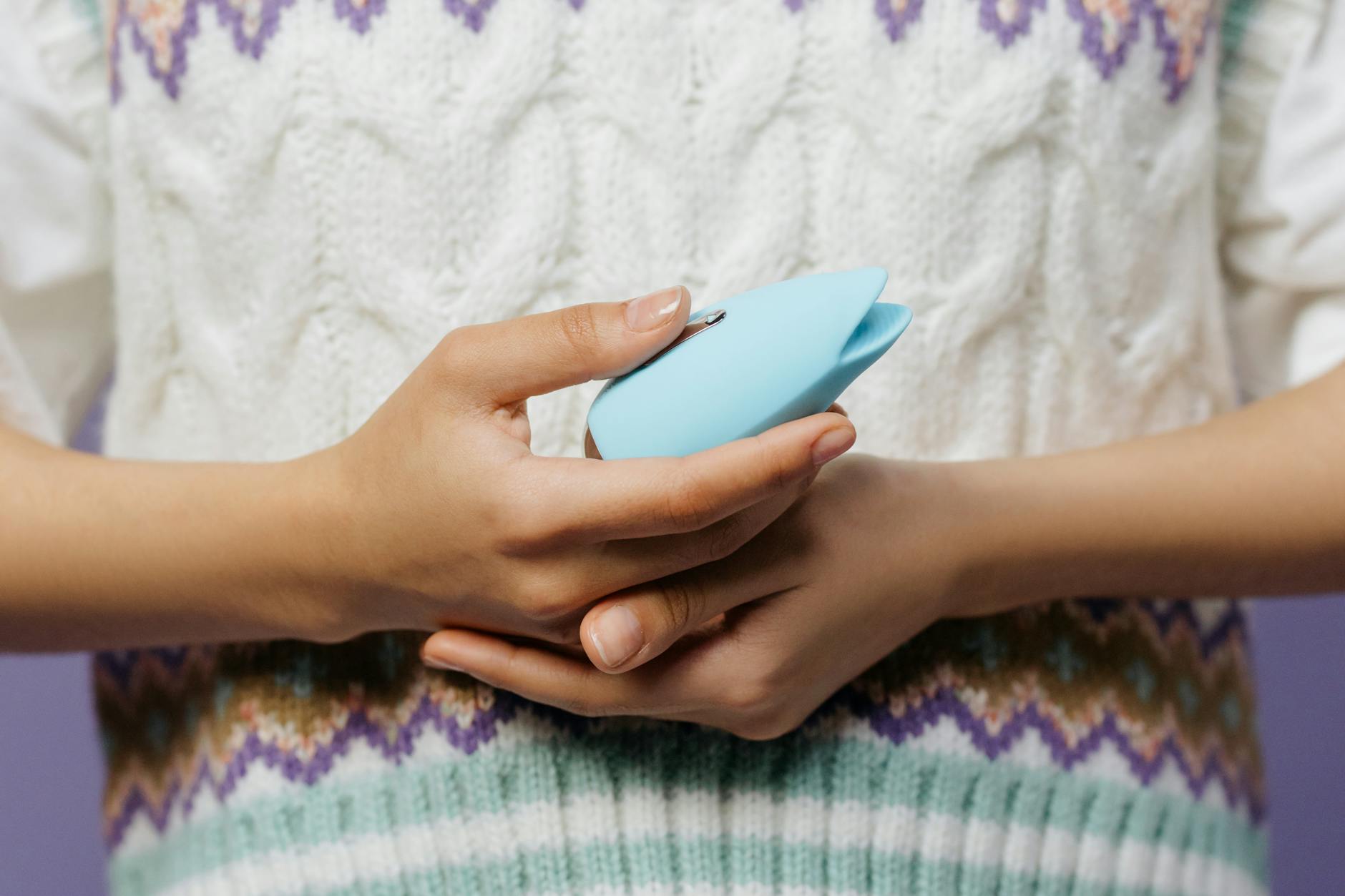 Photo by cottonbro studio on Pexels
What to do if they react badly
Let's be honest: sometimes a partner will react poorly. They'll get defensive, angry, or withdrawn. You need to know what to do if that happens, because your response matters.
First, don't abandon yourself. If your partner's discomfort is making you feel guilty for wanting pleasure, you've stepped back into the original problem. Your pleasure is not a luxury good available only when everyone is comfortable. It's your right.
Second, name the reaction without defending yourself. "I notice you're upset. I'm not asking you to be excited about this right now. I'm asking you to trust that I'm exploring something that matters to me, and it doesn't have anything to do with how I feel about you."
Third, offer real information if they're open to it. Some partners calm down when they realize a lemon clitoral vibrator isn't a replacement for them, it's an amplifier for pleasure that benefits everyone involved. Some partners get curious. Some need time.
But here's the thing: if a partner's need for you not to have pleasure is stronger than their willingness to let you explore your own body, that's a different problem. That's not about the vibrator. That's about control. And that's something worth examining, possibly with a therapist.
Using a lemon vibrator when your partner still feels unsure
Let's say you've had the conversation, they're not thrilled, but they're not forbidding it either. You're in the gray zone. Here's how to use your lemon vibrator in a way that builds trust rather than amplifying worry.
Start with solo exploration. Buy a lemon sexual toy, explore it alone first, understand what you like about it. This is for you, not for a performance. A lemon vibrator like the Lem works beautifully for understanding your own clitoral responses without pressure to perform or explain anything in real time.
Don't hide it, but don't announce every use. You don't need to give a play-by-play. "I'm going to use my vibrator" is honest. It's also not an invitation for feedback. Store it somewhere accessible but private. Treat it the way you'd treat your toothbrush. Normal, matter-of-fact, not contraband.
Invite them in when you're ready, but make it clear. "I'd like you to watch me use my lemon clitoral vibrator. No pressure on you to do anything. I just want you to see what I experience." Seeing is different from participating. Sometimes a partner who felt threatened becomes curious after they watch you orgasm more intensely than they've seen before. Not always, but sometimes.
Never use it as a punishment. If you're angry at your partner and you go use your vibrator pointedly, you're turning a tool for your pleasure into a weapon. That backfires every time. Keep the two things separate.
What changes when you stop managing their comfort
Here's what I've watched happen, again and again, after someone decides to use a lemon vibrator even though their partner is nervous about it.
At first, the partner stays unsure. But then they watch their partner become more relaxed. More confident. More orgasmic. And something shifts. The vibrator stops being a threat and becomes part of the landscape of pleasure in the relationship.
Sometimes the partner gets curious and asks to help. Sometimes they realize that lemon adult toys can be incorporated into partnered sex in ways that feel good for everyone. Sometimes they just make peace with the fact that their partner's body is their partner's responsibility first, and their own second.
The nervousness you feel right now isn't a sign that you shouldn't use your vibrator. It's a sign that you've learned to prioritize someone else's comfort over your own sensation. Using a clitoral vibrator isn't selfish. It's the opposite. It's you saying that your pleasure deserves the same protection and intention that you've been giving to everyone else.
Questions you might be asking yourself
How do I bring this up without it being awkward? Pick a moment when you're both calm, not in bed. "I wanted to talk about something. I've been thinking about exploring my pleasure more intentionally, and I'm interested in using a vibrator. I know that might feel unexpected, and I want to hear what comes up for you." Then actually listen. Don't defend, don't minimize, don't rush to solve it.
What if they say no? They can express discomfort. They can't prohibit you. Those are different things. If your partner is saying "I don't want you to do this," that's a control issue, not a comfort issue, and it's worth addressing with a therapist or a couples counselor.
Should I ask permission? No. You should be transparent and respectful of the relationship. That's different from asking permission. "I'm using a lemon vibrator" is a statement. "Can I use a lemon vibrator?" is asking for permission. Notice the difference.
Will using a vibrator make them feel inadequate? That's on them to work through. Your job is not to manage your partner's insecurities by denying yourself pleasure. Your job is to be honest and kind, and then let them have their reaction.
What if they want to be involved immediately? You can say yes or no. You don't have to perform your pleasure for them, and you don't have to hide your pleasure from them. Find the middle ground that feels right for you.
The bigger permission you're actually giving yourself
Using a lemon clitoral vibrator when you're nervous about your partner's judgment is about more than the tool. It's about deciding that your pleasure is not conditional on someone else's comfort with your body.
That's a boundary. And boundaries are what healthy relationships are built on. Your partner can love you and still feel unsure about vibrators. You can love your partner and still use one anyway. Those two things can coexist.
The question isn't whether your partner will judge you. The question is whether you're ready to decide that their judgment doesn't get to determine what you do with your own body. When you're ready for that, the conversation gets easier. The shame gets smaller. And your pleasure gets bigger.
People also ask
How do I know if my partner's concern is normal or a red flag? Normal concern: "I don't understand this, can you explain?" Red flag: "You can't do this." Normal concern: "Will this change our sex life?" Red flag: "I forbid you from using toys." Normal concern comes with curiosity. Red flags come with control. Trust that distinction.
Can I use a lemon vibrator if I'm not sure about my relationship? Yes. In fact, understanding your own pleasure independently is clarifying. If you're in a relationship where your partner's discomfort prohibits you from pleasure, that's information. Use that tool to understand yourself, and let that understanding inform your bigger decisions.
Should I compromise and use toys only when my partner wants to? Not as a permanent solution. You can make that agreement temporarily while they adjust. But if you're permanently outsourcing your pleasure to your partner's comfort level, you're back where you started. Eventually, you'll need to reclaim your solo exploration time.
What if my partner wants to use the vibrator on me but I want to use it alone? Both things can be true. You can have solo sessions with your lemon vibrator and partnered sessions where they participate. You're allowed to want different things in different moments. That's not rejection. That's nuance.
How do I bring it up if we've never talked about sex toys before? Start smaller than you think you need to. "I've been thinking about trying something new with my pleasure," is a door opener. You don't have to say "I'm buying a lemon clitoral vibrator tomorrow." You can build to it. Some conversations take multiple sessions. That's okay.
Is it normal to feel guilty after I start using a vibrator? Yes, and it's worth examining where that guilt lives. Does it come from your partner's reaction, or does it come from older messages about your body and pleasure? Sometimes the guilt is about your relationship. Sometimes it's about your history. Separating those two things is important.
Your pleasure matters. Not someday when your partner comes around. Not when you feel less guilty. Now. Using a lemon vibrator is one way of honoring that. Start there, and watch what else becomes possible.