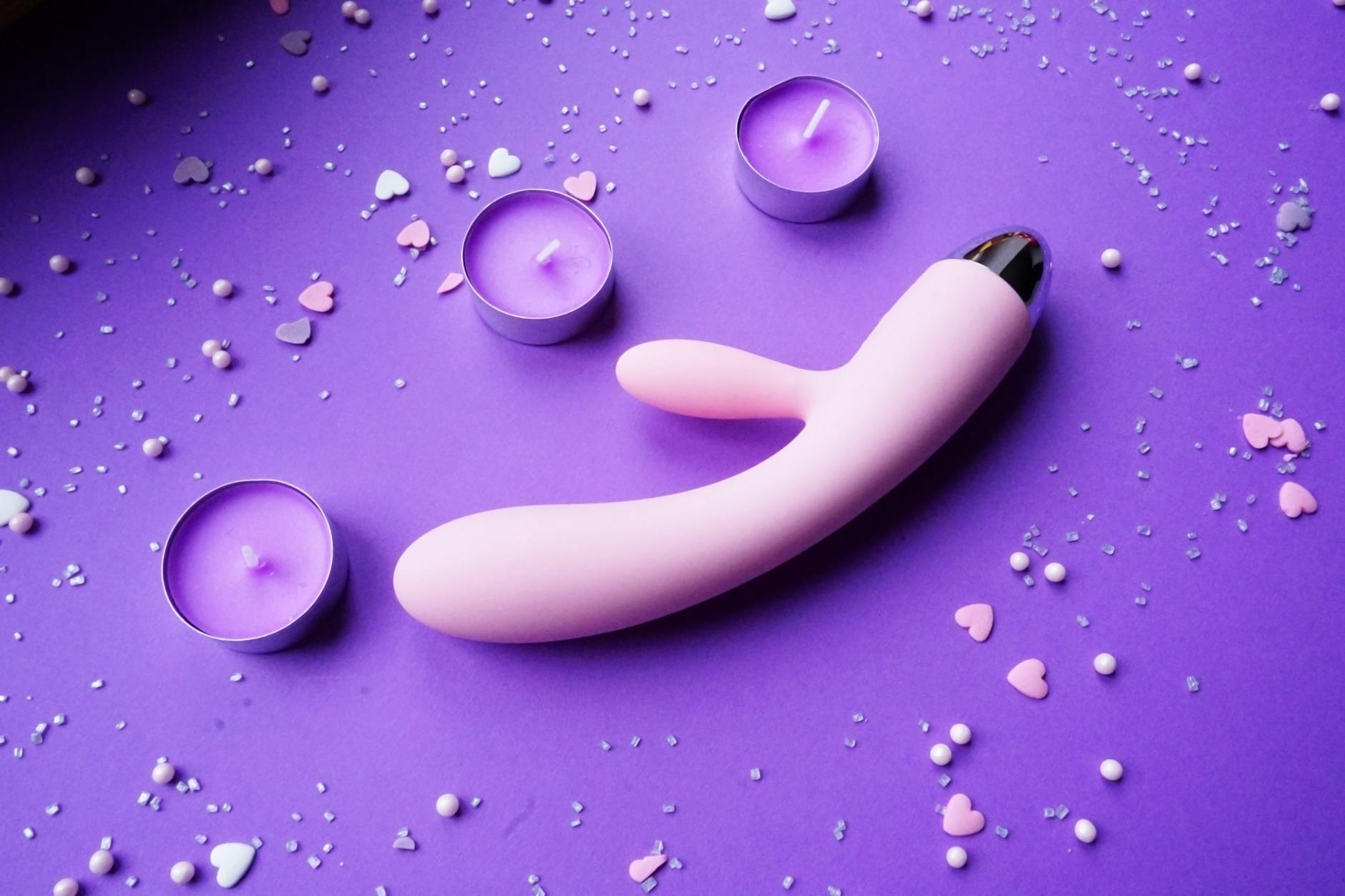
How to Talk About Lemon Vibrators With Your Partner
Let's be real: bringing up lemon vibrators or any clitoral vibrator in an established relationship feels risky. You're worried your partner might hear it as criticism ("you're not enough"), or feel threatened, or think you're saying something's wrong with them. So you don't say anything. You keep the conversation locked inside your head, and your pleasure stays smaller than it could be.
I've sat across from hundreds of couples where this exact silence is costing them. The good news? This conversation doesn't have to blow up. It just needs the right frame.
Why this talk feels so loaded
Here's what's really happening underneath the anxiety. Your partner, consciously or not, has been taught that their touch, their effort, their body should be enough. Society tells men and women that needing a toy means something failed. So when you bring it up, they don't hear "I want more pleasure." They hear "you failed." That's the gap we need to close.
The other thing going on: you might be carrying shame about wanting the vibrator in the first place. You've internalized the idea that asking for this is selfish, or weird, or makes you high-maintenance. So you're already apologizing before you've opened your mouth.
Neither of those stories is true. Lemon vibrators and other clitoral vibrators aren't replacements. They're literally tools that do something fingers and other body parts can't do as efficiently. That's not a criticism of your partner. That's physics.
Frame it as expansion, not replacement
The single most important thing you can do is separate the toy from your partner's body. You're not saying "I need this instead of you." You're saying "I want to experience something new, and I'd love to explore it together."
Here's the difference in language:
Frame A (creates defensiveness): "I feel like our sex life has gotten boring. I think we should try a vibrator."
Frame B (opens the door): "I've been thinking about trying something new that could feel really good for me. I'd love for you to be part of it."
Frame B does three things at once. It centers your pleasure, not the problem. It frames the toy as an addition, not a solution to a failure. And it explicitly invites your partner in as a collaborator, not someone being replaced.
When and where to have this conversation
Timing matters more than you'd think. Don't have this conversation during sex, immediately after, or when either of you is tired or stressed. You need about 20 minutes of calm, private time when you're both relatively clear-headed.
The best moment is usually midweek, not Friday night (too much expectation attached), and not in the bedroom. Weird as it sounds, having this talk on the couch or over coffee creates psychological distance from performance pressure. Your brain can think, not just feel.
Start it when you have something positive to say. Not "we need to talk" (that triggers alarm). Instead: "I've been thinking about something I want to explore with you, and I'd love your thoughts."
What actually to say (word by word)
Here's a template you can steal:
"I've been researching clitoral vibrators, specifically lemon vibrators and how they work. I'm curious about trying one, partly because I'm interested in understanding my own body better, and partly because I think it could be fun for us together. I'm not saying anything's missing from us. I just want to expand what we do. Would you be interested in exploring that with me?"
Notice what's in there:
- You've done research (you're not impulsive).
- You're centering your own curiosity and pleasure, not his failure.
- You're being specific about the toy ("lemon vibrator" not "a vibrator").
- You're explicitly saying it's not about him.
- You're asking him to collaborate, not commanding.
If he pushes back, don't defend. Instead, get curious about what he's actually worried about. "Tell me what you're thinking" beats "but it's not a replacement for you" every time. Often the real concern isn't the toy. It's something deeper: "Does she still want me?" "Am I failing?" "Does this mean she's not satisfied?"
Answer the actual question, not the surface objection.
Handling the "why do you need that" response
This is the most common deflection. Here's how to respond without getting defensive:
"Because my body responds to that kind of stimulation differently than hands alone. It's not about you. It's about me understanding myself better. And I think it could be hot for both of us."
Then offer him a role. "Would you be interested in being part of it? You could hold it, or we could use it together while you're inside me, or you could just watch." Give him options that make him feel included, not sidelined.
If he's still resistant after you've explained the physics and the pleasure part, there might be something deeper going on. That's when couples therapy actually helps, not because there's something wrong with you for wanting a vibrator, but because his resistance is probably connected to something about intimacy or vulnerability that's worth exploring together.
After the conversation: actually introducing the toy
If he said yes, don't just show up with it. Let him be part of the selection. "I'm thinking about the Lem, but there are other options. Want to look at them together?"
When you actually use it, start slow. The first time, use it on yourself while he watches or touches you elsewhere. This gives him something to do (he's not just watching you have fun without him), and it gives you space to figure out what feels good without pressure.
After that first time, check in. "What did you think? How did that feel?" Make it conversational, not like you're grading his performance.
Most partners who were nervous beforehand end up actually enjoying it. They like watching pleasure happen in real time. They like that there's less pressure on their hand or their specific technique. And honestly, a lot of them end up being genuinely curious about why you enjoy it so much.
If he said no: what to do
Here's the hard part. If he genuinely doesn't want you to use a lemon vibrator or any clitoral vibrator in your relationship, you have three choices: accept it, negotiate a middle ground, or realize this is a bigger compatibility issue.
Middle ground looks like: "You don't have to participate, but I'd like the freedom to explore this on my own. It's about my pleasure, not about us." Some people can live with a partner having solo pleasure practices they don't participate in. Some can't. That's a real conversation to have.
If he can't accept either of those, then you're looking at whether this restriction represents something broader. Does he control other aspects of your autonomy? Does he get to dictate your body and your pleasure? These are the real questions underneath the vibrator.
The long game
One conversation isn't the end. As your relationship evolves, your pleasure needs might shift. <a href="/blog/why-lemon-vibrators-feel-better-during-hormonal-transitions">Lemon vibrators often feel different during hormonal transitions</a>, and what worked last year might need adjusting now. Keep talking. Make it normal.
The couples I work with who have the best sexual relationships aren't the ones who have it all figured out. They're the ones who can say "I want to try something" without shame, and whose partners can hear it as curiosity instead of criticism. That only happens if you build a culture where pleasure talk is just... talk. Not taboo. Not risky. Just part of how you two work.
You deserve a partner who wants you to feel as much pleasure as possible. And you deserve to want that for yourself without apologizing for it.
Common questions people have before this talk
What if my partner feels emasculated?
He might, initially. That's real. But feeling emasculated by a toy is about his story, not your body. The healthy response is for him to examine why his sense of masculinity is threatened by a device that makes you feel good. That's his work to do, not your responsibility to avoid.
You can support him by being clear: "Your value in this relationship isn't about making me orgasm a specific way. It's about trust, presence, and wanting me to feel good." But you're not responsible for managing his feelings about your pleasure.
Should I ask permission or just tell him I'm doing it?
It depends on your relationship. If you're equal partners, you don't need permission. You can be respectful and collaborative ("I'm thinking of getting a lemon clitoral vibrator and I'd love your input") without needing him to approve. But if you're in a relationship where decisions are made collaboratively, frame it that way from the start.
What if we're long distance and this feels awkward to bring up?
Actually, long distance can make this easier. You have more space to write it out first if that feels safer. You can send a text like "I've been thinking about something and I want to tell you." That gives him time to process before you're on a video call or phone. Sometimes the written word buys you both some breathing room.
Is using a lemon vibrator during partnered sex cheating?
No. Using a toy with your partner is partnered sex. It's an expansion, not a betrayal. If your partner has a rule against it, that's worth examining together. But the toy itself isn't infidelity.
What if I'm embarrassed to use it in front of him?
That's normal. Start solo. Build your confidence. Once you know what you like, sharing it with a partner who's actually interested is a lot easier. And honestly, most partners find it incredibly sexy to see their partner confidently knowing their own body.
How do I know if a lemon vibrator is right for me?
Lemon vibrators work through suction and gentle pulsing, which creates a different sensation than traditional vibration. They're amazing for people who find direct vibration too intense, or who prefer a broader stimulation pattern. If you're sensitive or new to toys, <a href="/blog/how-to-use-lemon-vibrators-first-time-guide">learning how to use lemon vibrators for the first time</a> is a good starting point before bringing your partner in.
Can I use a lemon vibrator if I'm with someone who's not interested in toys?
Absolutely. Solo pleasure and partnered pleasure are different things. You can have a healthy solo practice with <a href="/blog/lemon-vibrators-after-long-break-reconnecting-with-pleasure">lemon vibrators as part of reconnecting with your own body</a> while your partnered sex looks completely different. The key is honesty about what's happening and mutual respect for each other's boundaries.
The real talk
This conversation is worth having. Your pleasure matters. Not as something secondary to his, not as a favor he's granting you, but as something central to your wellbeing and your relationship satisfaction.
Partners who can talk about sex openly, without shame, stay together longer. They report higher satisfaction. They trust each other more. So by having this conversation, you're not risking the relationship. You're actually strengthening it.
Go have the talk. You've got this.