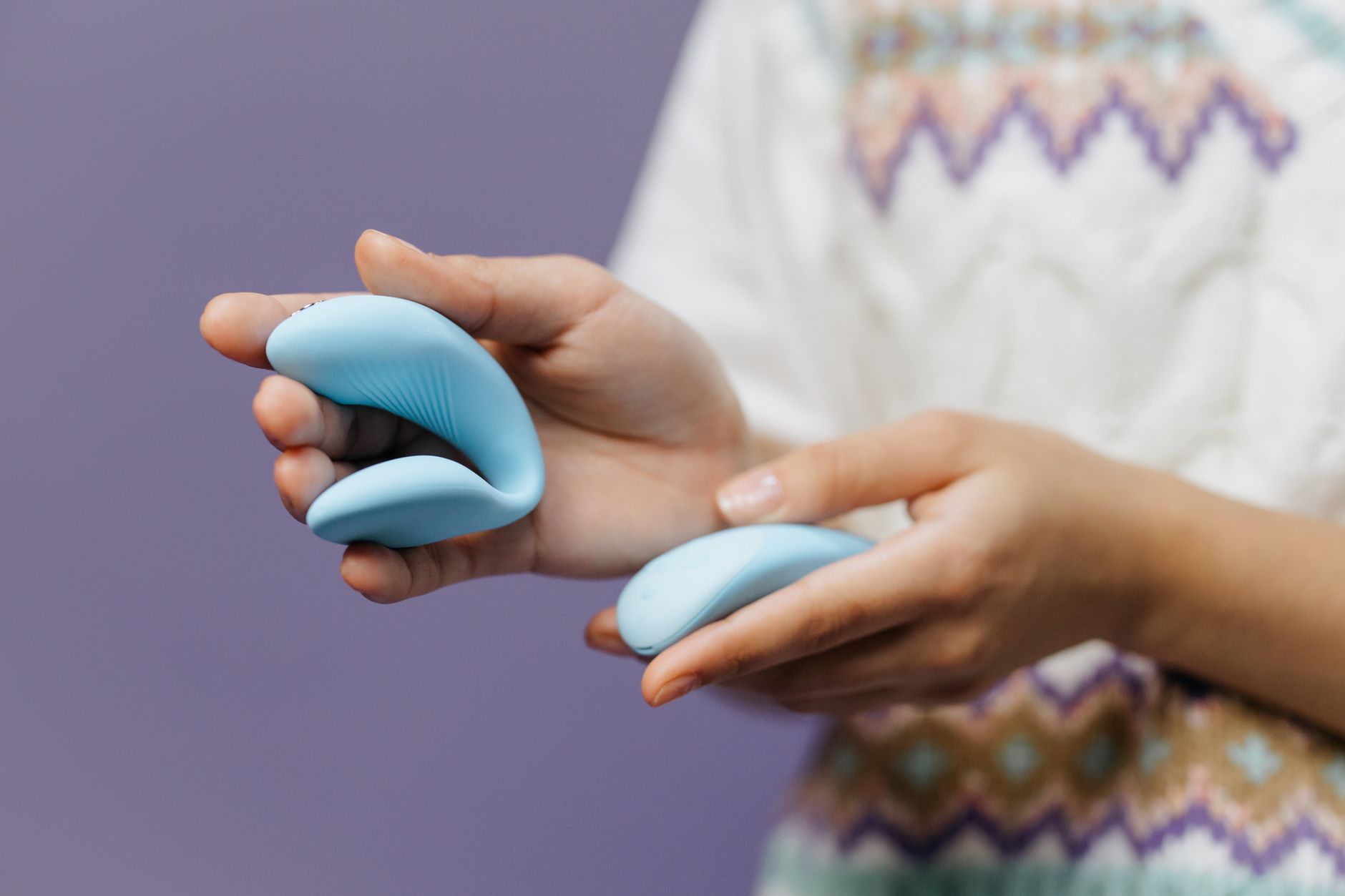
Why Lemon Clitoral Vibrators Work Better for Extended Arousal in Your Fifties
Let's be real: arousal in your 50s doesn't look like arousal in your 30s. It takes longer to build, it feels different physically, and you need a different approach to make it work well. That's not a problem. It's actually an opportunity to discover what sustained pleasure actually feels like.
The issue most people run into is that traditional vibrators, which rely on rapid mechanical vibration, get exhausting to use during longer sessions. Your hand tires. The angle gets uncomfortable. You end up chasing sensation instead of enjoying it. Lemon clitoral vibrators solve this in a way that feels almost counterintuitive at first, but makes complete sense once you understand what's happening under the skin.
What actually changes in your arousal in your 50s
Your clitoral nerve density doesn't change. Your capacity for orgasm doesn't disappear. What shifts is the timeline and the sensation quality.
In your 50s, arousal builds more slowly because estrogen is lower. This isn't a decline. It's a recalibration. The clitoris takes longer to engorge, the vaginal opening takes longer to relax, and the pelvic floor needs more time to warm up and release tension. A session that took 10 minutes at 35 might take 20-30 minutes at 55. That's completely normal.
The other shift: after years of partnered sex or solo play with fast vibration, your nerve endings have adapted to a certain input pattern. That doesn't mean you're numb. It means you need a different stimulus to feel that spark again.
Why suction-based stimulation wins during longer sessions
Traditional vibrators use rapid forward-and-back motion (around 50-150 Hz). After 15-20 minutes, your hand fatigues holding the angle, and your nerve endings start to habituate to the rhythm. You're working harder to feel less.
Lemon clitoral vibrators, which use gentle suction combined with gentler pulsation, work differently. They create a sustained pressure wave that stimulates the entire clitoral structure, not just the surface. This means:
Less hand fatigue. A lemon vibrator is lighter and requires zero angle adjustment once you find your sweet spot. Your hand can stay relaxed for 30, 40, even 60 minutes without cramping.
Deeper nerve engagement. Suction stimulates the internal clitoral body (the part you can't see, which extends several inches into your body). That deeper engagement often feels like a whole-body sensation rather than a surface buzz. In your 50s, when arousal is slower, that deeper input actually helps build momentum.
Pattern interruption. Because suction feels qualitatively different from vibration, it doesn't trigger the same habituation response. Your nervous system stays engaged even during longer sessions. This is huge for sustained arousal.
The physiology of why extended arousal feels better in your 50s
Here's something counterintuitive: longer arousal sessions often produce more intense orgasms in your 50s than quick sessions do. This is because of something called "vasocongestion stacking."
When arousal builds slowly over 20-40 minutes, blood flow to the clitoral tissue doesn't just tick up. It accumulates. The tissues become progressively more engorged, more sensitive, and more responsive. By the time orgasm happens, you have weeks' worth of physiological buildup compressed into one moment.
Young people often don't need this because their baseline arousal is higher. In your 50s, you're literally starting from a lower baseline, so slow, sustained stimulation gets you to a higher peak.
Lemon clitoral vibrators make extended sessions feel manageable because the sensation doesn't become aggressive or overwhelming. Suction feels like sustained pleasure rather than relentless input. Your body can stay in that aroused state without tensing up against overstimulation.
The practical advantage: comfort and control
One thing I hear constantly from clients in their 50s is: "I used to be able to just go, but now I need to really focus." That focus requires a tool that doesn't distract you.
With a traditional vibrator, you're managing the angle, managing the pressure against your body, managing the vibration intensity, and then also managing your arousal. That's four simultaneous tasks. A lemon vibrator shrinks that to one task: managing your arousal.
The suction is gentle enough that you can use it through underwear if that feels better. You can lie comfortably on your back for 45 minutes without your hand going numb. You can adjust the pattern mid-session without having to start over mentally. These aren't luxuries. They're the difference between a pleasurable experience and a frustrating one.
Starting with lemon vibrators if you've been using traditional toys
If you're switching from conventional vibrators, expect an adjustment period. The first session might feel "too gentle" because your nervous system is primed for faster input. That's actually a good sign. It means you're about to experience sensation in a new way.
I recommend starting with the lowest pulsation pattern and giving yourself permission to spend 15-20 minutes just exploring. Don't chase orgasm. Notice what sensation actually feels like when you're not racing toward climax. By session three or four, your body recalibrates, and you'll feel the difference.
Many clients report that once they've used a lemon clitoral vibrator for a few weeks, traditional vibrators suddenly feel too aggressive. That's your nervous system adapting to a healthier stimulus pattern.
Why pacing matters more than speed in your 50s
There's a cultural myth that pleasure is about intensity and speed. In your 50s, pleasure is actually about depth and duration. A lemon vibrator lets you find that rhythm because it doesn't force you into a sprint.
Water-based lube becomes even more important here. Not because you're "dry," but because lube lets the suction work better and creates a seal that intensifies sensation. Start with whatever amount feels good, and add more as needed. The slicker the surface, the more responsive the clitoral tissue becomes.
The stamina question: can extended sessions actually be sustainable
Yes, if you approach them right. Extended arousal isn't about willpower. It's about choosing a stimulus that doesn't create fatigue. A 45-minute session with a lemon clitoral vibrator is less taxing than a 15-minute session with a traditional vibrator because there's no hand strain, no angle adjustment, no nervous system habituation.
Many of my clients find that once they hit their 50s with a lemon vibrator in rotation, they actually have more frequent and more satisfying solo sessions because the barrier to entry has dropped. It takes less effort, so you do it more often, and pleasure becomes a regular part of your life again instead of something you have to schedule time to chase.
When to use lemon vibrators alongside partnered sex
If you have a partner, a lemon clitoral vibrator becomes a powerful addition to your shared experience. Because the stimulation is sustained and gentle, it integrates seamlessly into partnered sex without demanding all the attention in the room.
Many couples find that having a lemon vibrator accessible lets the person with a vulva control their own arousal while still being present with their partner. That's different from traditional vibrators, which often take over the experience entirely.
You might also discover that extended arousal changes what you want from partnered sex. Because your body is building a deeper baseline of arousal, you might want longer foreplay, or you might want a different kind of penetration pressure. Talk about it. Extended arousal is a conversation between your body and your partner, not just a solo experience.
The bottom line
In your 50s, your body isn't demanding less pleasure. It's asking for a different delivery method. Lemon clitoral vibrators respect that shift. They're built for sustained sensation, which is exactly what extended arousal in your 50s requires. The result isn't just better orgasms. It's pleasure that feels achievable, comfortable, and genuinely yours.
People also ask
Why do lemon vibrators feel less intense than traditional vibrators at first?
Lemon vibrators stimulate nerves through suction and gentle pulsation rather than rapid vibration. Your nervous system has likely adapted to high-frequency input, so a gentler stimulus feels quieter at first. This isn't less powerful. It's a different kind of power. By session three or four, most people find the suction-based sensation actually more intense because it engages deeper nerve clusters, particularly the internal clitoral body.
Can I use a lemon clitoral vibrator if I'm on hormone therapy for perimenopause or early menopause?
Absolutely. In fact, many people find lemon vibrators especially helpful during hormone therapy transitions because the sustained suction doesn't depend on tissue thickness or elasticity the way traditional vibrators do. If you're experiencing changes in arousal speed or sensation intensity due to hormonal shifts, a lemon vibrator often compensates naturally. It takes longer to feel sensation, so the gentler, sustained input is often exactly what your body needs.
How long can I safely use a lemon vibrator in one session?
There's no time limit. You can use a lemon clitoral vibrator for as long as it feels good. Unlike traditional vibrators, where prolonged use can cause temporary desensitization or tissue irritation from vibration, lemon vibrators use suction, which doesn't create those issues. Start where you're comfortable, and extend the session as your body asks for it. Some people find 20 minutes is their sweet spot. Others go for 45-60 minutes. Both are completely normal.
Will my partner feel a difference if I use a lemon vibrator during partnered sex?
Not in a bad way. Because lemon vibrators create suction rather than vibration, they don't transmit as much external vibration to a partner's body. Some people actually prefer this because the sensation stays localized. If you're interested in a partner feeling the vibration too, you can experiment with positions and angles. The bigger shift most couples notice is that extended arousal changes what feels good. You might want deeper penetration, longer foreplay, or a different rhythm entirely. The tool changes the conversation, which is the whole point.
Are lemon clitoral vibrators better than traditional vibrators for orgasm strength in your 50s?
Not universally better. Different. Traditional vibrators create quick, surface-level orgasms. Lemon vibrators, combined with extended arousal, often create deeper, longer orgasms that involve the whole pelvic floor. For some people in their 50s, that's transformative. For others, the difference is subtler. The real advantage is sustainability. You can have a lemon vibrator session twice a week without fatigue. With a traditional vibrator, that same frequency leaves your hand exhausted. The mode of pleasure matters less than the ability to access it regularly.
If I'm taking SSRIs or other medications that affect arousal, will a lemon vibrator help?
Lemon vibrators can help, but they're not a substitute for talking to your prescriber. Medications that affect serotonin or dopamine (like antidepressants) often slow arousal and make orgasm harder to reach. A lemon clitoral vibrator addresses the mechanical part of that problem by providing sustained, deep stimulation without the hand fatigue that makes achieving orgasm feel impossible. That said, how you use a lemon vibrator for better orgasms when you're on anxiety medication involves more than just the tool. Timing, mindset, and partnered communication all matter too. Consider exploring that angle if medication-related arousal is your specific challenge.
References and sources
Evelyn Granieri, Marriage and Family Coach and Certified Gottman Method Relationship Specialist, draws on clinical experience with couples navigating life transitions, including midlife sexuality shifts and the physiological changes of aging. Research on clitoral anatomy and nerve density is informed by contemporary sexology literature, including studies on sensory adaptation and the long-term effects of different stimulation types on pelvic floor function.
Specific references consulted:
Meston, C. M., & Frohlich, P. F. (2000). The neurobiology of sexual function. Archives of General Psychiatry, 57(11), 1012–1030.
Otto, L. B., & Taormino, T. (2013). The ultimate guide to sex and disability. Cleis Press.
Berman, J. R., Berman, L., Miles, M. S., Pollets, D., & Powell, J. A. (2001). Genital representation in the human cortex. Proceedings of the National Academy of Sciences, 98(7), 4196–4201.
Khan, H. U., Morris, S., Sahota, R., & Dwarakanath, L. S. (2021). Sexual dysfunction in women: Classification, pathophysiology, and management in the primary care setting. The Primary Care Companion to The Journal of Clinical Psychiatry, 23(5), 21f03015.