The trade-off nobody warns you about
You started antidepressants. Your mood lifted. Your anxiety quieted. And then you picked up your lemon vibrator and thought, "Wait, where did that go?" The orgasm that used to arrive reliably now feels like it's receding into the distance. You're touching yourself the same way. Your partner is doing the same things. But the pathway to pleasure has gotten longer, steeper, or sometimes just invisible.
This is real. It's neurochemical. And it's not a sign that the medication is wrong for you or that your pleasure is gone forever. But I'm not going to lie and tell you it's not frustrating.
What antidepressants actually do to arousal
Most antidepressants work by raising serotonin levels in your brain. SSRIs (selective serotonin reuptake inhibitors) like sertraline, escitalopram, and paroxetine are the most commonly prescribed. Here's the trade-off: serotonin calms your fight-or-flight system, which is great for anxiety. But arousal and orgasm require a very different chemical state. They need dopamine, norepinephrine, and a slight decrease in serotonin.
When you flood your system with serotonin, you're essentially asking your nervous system to feel safe and calm. That's the point. But that calmness can also dampen the activation needed for sexual response. It's not that you're broken. It's that your brain chemistry is in a different configuration.
The medication is working. Your nervous system is finally not in constant alert mode. But that same mechanism that's protecting you from panic attacks is also delaying your ability to reach orgasm with a lemon vibrator, a partner, or on your own.
Why this hits harder for some people
Not everyone experiences sexual side effects from antidepressants. Some people notice nothing. Others find that arousal takes longer but orgasm is still achievable. And yes, some people find that their desire drops significantly. The variation comes down to a few factors.
Your baseline sensitivity matters. If you've always had a fast arousal response, the slowdown feels dramatic. If you've always taken longer, you might not notice much difference at all. Dosage matters too. Higher doses tend to create more pronounced delays. And the specific medication matters. Some SSRIs have lower sexual side effect rates than others.
Partner status also plays a role. Solo pleasure with a lemon clitoral vibrator and partnered sex recruit different neural pathways. Some people notice the delay more in partnered situations because there's external timing and expectation involved. Solo play, you can take your time without anyone waiting.
The timeline: when does it actually improve
Here's what the research shows. Sexual side effects from SSRIs typically appear within the first week or two of starting the medication. They plateau around week three to four. And here's the hopeful part: many people see improvement or full resolution within three to six months as their body adjusts to the new chemical baseline.
That doesn't mean you do nothing for six months. But it does mean that what feels impossible in week two might feel manageable by month four. Your brain is learning to work with this new serotonin level. Plasticity is happening.
Some people find that switching to a different SSRI helps. Bupropion, an atypical antidepressant that works on dopamine rather than serotonin, has a lower sexual side effect profile. If three months have passed and nothing has shifted, it's worth a conversation with your prescriber about alternatives.
What actually helps right now
Four concrete things I recommend to clients taking antidepressants who are frustrated with their lemon vibrator or any sexual experience.
1. Reframe the timeline. You're not trying to orgasm in ten minutes anymore. You're aiming for twenty, thirty, or forty. Budget that time. Tell your partner. Most importantly, don't interpret the longer timeline as failure. It's adjustment.
2. Lower your expectation threshold initially. An orgasm doesn't have to be the goal of every encounter. Sometimes the goal is just sensation, connection, or pleasure without climax. Lemon vibrators and other clitoral toys are fantastic for this because they provide consistent stimulation while you're rewiring what "success" looks like during this period.
3. Increase stimulation variety. If your lemon vibrator worked at pattern three before, try starting at a stronger pattern now. If you used it alone, try it with your partner or with fantasy. Sometimes a change in context recruits different neural pathways and can shortcut the delay.
4. Move your body first. Exercise, even fifteen minutes of walking, increases dopamine and norepinephrine. Doing cardio or strength training before solo time or partnered sex can prime your nervous system in the direction you need. It's not foolproof, but it helps.
The conversation with your partner
If you're in a relationship, your partner needs to understand this isn't about them. Desire isn't dropping because they're less attractive or the relationship is in trouble. Your nervous system is recalibrating. Some partners take this personally without meaning to. Prevention is clearer than repair.
Tell them: "This medication is helping my mental health significantly. One side effect is that arousal is taking longer. This doesn't mean I'm less interested in you or in sex. It means the timeline has changed, and I need your patience while my body adjusts." Most partners, when they understand the neurology, become allies rather than feeling blamed.
When to push back on the medication
If sexual function is genuinely important to your quality of life, and the side effects aren't improving after four to six months, bring this up with your prescriber. You're not being shallow. Sexual function is a legitimate domain of health. A good prescriber will listen.
Options include dosage adjustment, switching to a different SSRI, adding an augmentation medication to counteract the sexual side effects, or moving to an entirely different class of antidepressant. Bupropion, tricyclic antidepressants, or SNRIs (which affect both serotonin and norepinephrine) sometimes have lower sexual side effect profiles.
The key is not to stop the medication on your own because of sexual side effects. That's unsafe and can cause withdrawal symptoms. But advocating for adjustments or alternatives with your doctor is absolutely appropriate.
The longer view
You're taking this medication because your mental health matters. That's the foundation. Sexual pleasure matters too, and the two aren't mutually exclusive. The lemon vibrators, the suction toys, the clitoral stimulation tools that work so well for so many people still work for you. They might just require patience, adjustment, and a willingness to explore what pleasure looks like during this transition.
Most people find that within three to six months, either the side effects resolve significantly or they've figured out a new rhythm that works. Your body is resilient. Your pleasure isn't gone. It's just temporarily on a different timeline.

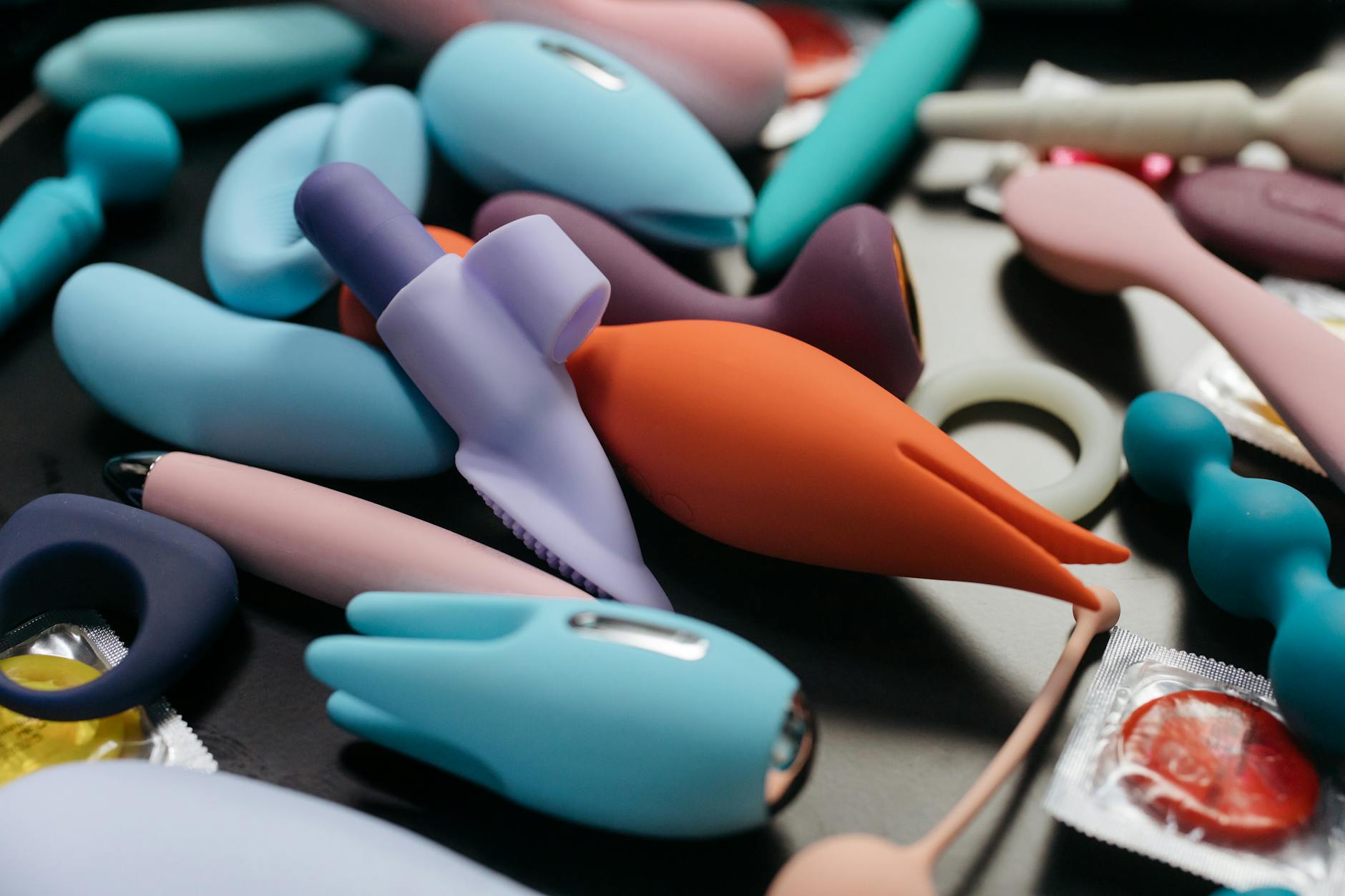
Photo by FounderTips on Pexels
FAQ: Antidepressants and Sexual Response
Does every SSRI cause delayed orgasm?
No. About 40 to 60 percent of people taking SSRIs experience sexual side effects, but that means 40 to 60 percent don't, or experience mild effects. Sertraline and paroxetine have higher rates of sexual dysfunction reported than escitalopram or citalopram. If one SSRI causes problems, a different one might not.
Can I take anything to speed up orgasm while on antidepressants?
There's limited evidence for most over-the-counter supplements, but a few things have research backing. Ginseng has some evidence for improving sexual function in people on SSRIs. Bupropion, prescribed by your doctor, can be added to augment the antidepressant and counteract sexual side effects. And some research suggests that adding a small dose of buspirone can help with SSRI-related sexual dysfunction. Talk to your prescriber before adding anything.
Will my lemon vibrator feel different once the side effects wear off?
Yes. Most people report that once their body adjusts to the medication or the side effects resolve, sensation and response return closer to baseline. Some people find that they appreciate the slower burn and actually prefer the new pacing, even once they could go faster. Your nervous system will adapt.
Is it normal to lose desire completely on antidepressants?
Complete loss of desire is less common than delayed orgasm, but it does happen. If you've been on the medication for a month and you have zero interest in sex or self-pleasure, bring this up with your doctor. It could be the medication, or it could be depression masquerading as a medication side effect. Either way, your prescriber needs to know.
Should I stop taking my antidepressant because of sexual side effects?
No. Stopping an SSRI abruptly can cause withdrawal symptoms and your depression or anxiety can return. But you absolutely can talk to your prescriber about adjusting the dose, switching to a different medication, or adding something to counteract the sexual side effects. These are legitimate treatment conversations, not you being difficult.
How long until I feel normal again sexually?
For most people, three to six months. For some, it's shorter. For others, it takes closer to a year. And some people find a new normal that's different but still satisfying. The variable is partly your individual neurobiology and partly how you adapt your expectations and approach during the transition.
The bottom line
Antidepressants help your mind. That's the primary goal, and it matters enormously. The sexual side effects are real and worth acknowledging, but they're not permanent, and they don't mean you have to choose between your mental health and your pleasure. Give your body time to adjust, communicate clearly with your partner and your doctor, and remember that lemon vibrators, clitoral toys, and your own capacity for pleasure are still there. They're just working on a different timeline right now.