
Here's what nobody tells you about perimenopause and orgasm
Your lemon vibrator used to work. You'd reach for it, spend five or ten minutes, and finish satisfied. Then something shifted. Now you're hitting twenty, thirty, even forty-five minutes with no payoff. You're not broken. Your hormones are just rewriting the rules.
Perimenopause, the five to ten year window before menopause officially arrives, changes the speed at which your body responds to pleasure. It's not that your clitoris stopped working. It's that the neurochemical chain reaction that triggers arousal and orgasm got slower. Once you understand why, you can actually work with it instead of fighting it.
What perimenopause does to your arousal timeline
Your brain runs on estrogen and progesterone. When these hormones start fluctuating wildly in perimenopause, three big things happen to sexual response.
First, blood flow to your genitals becomes inconsistent. Orgasm, at its core, is rhythmic engorgement and release. When estrogen dips, the tissues that swell during arousal don't fill as quickly. That means the physical sensation takes longer to build toward climax. It's not imagination. Studies show measurable delays in genital engorgement during perimenopause.
Second, your dopamine and norepinephrine drop. These neurotransmitters are the speedboats of sexual response. They're what makes arousal feel fast and automatic. When hormone fluctuations tank your dopamine, the arc of pleasure flattens. You're still capable of intense sensation, but getting there requires more deliberate stimulation and longer warm-up time.
Third, your pelvic floor tightens. Falling estrogen means less collagen and elasticity in the vaginal tissue, but also in the muscles surrounding your clitoris and vaginal opening. A tighter pelvic floor paradoxically delays orgasm, even though tension often feels like it should speed things up. It's the opposite. Tension actually blocks the rhythmic release that creates climax.
Why your lemon clitoral vibrator might feel "less intense" right now
Let's say you're using a lemon vibrator and you're used to finishing in ten minutes. Suddenly it's taking thirty. Your first instinct is usually to crank the intensity higher, figuring more power equals faster results.
That backfires in perimenopause. Here's why. At higher intensities, a lemon sucker creates sustained pressure and suction that your body can't yet translate into arousal. You're flooding the nervous system with stimulation, but if the underlying blood flow and hormone balance aren't there yet, you're just creating numbness and fatigue. You're not building toward orgasm. You're damping it down.
It feels contradictory but this is where patience actually works faster than force. Lower to medium intensity settings, used consistently over a longer period, allow your blood vessels to gradually engorge and your nervous system to build the arousal momentum you need. You're not fighting against your body's new timeline. You're syncing with it.
The warm-up window your body needs now
In your thirties and forties, you might have gotten aroused mentally and physically ready within minutes. Perimenopause typically adds fifteen to thirty minutes to that window.
Before you touch your lemon vibrator, spend time on non-genital touch. This matters a lot more now than it did five years ago. Massage your own shoulders, chest, inner thighs, or ask a partner to do it. This increases systemic blood flow and primes your nervous system. It sounds like foreplay filler, but it's actually essential machinery for reaching orgasm during perimenopause.
Then spend time with your vibrator on the lowest setting, not even directly on your clitoris yet. Trace around the vulva, the inner thighs, the area just above your clitoris. Spend five to ten minutes here. Let sensation build gradually. Your body is learning to respond again under new hormonal conditions. Rushing this phase almost guarantees you won't reach climax.
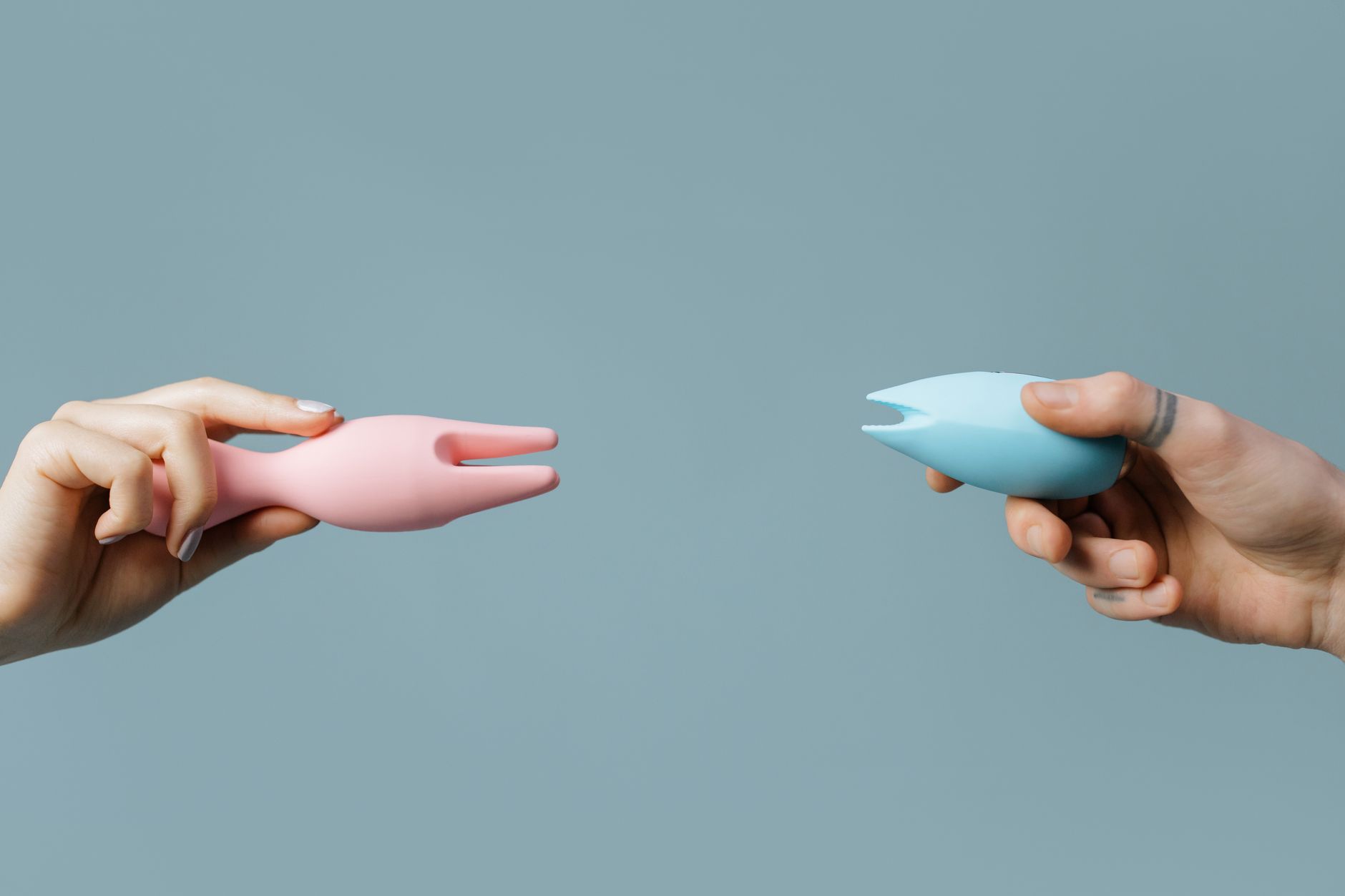
Photo by cottonbro studio on Pexels
Lubrication becomes non-negotiable
Estrogen supports natural lubrication. When estrogen dips, that support lifts. This is one of the most straightforward effects of perimenopause and also one of the most fixable.
Water-based lubricant isn't a luxury or a sign something's wrong. It's basic infrastructure now. Apply it generously before you start, and reapply as you go. This does two things. It reduces the friction that can cause discomfort and numbing. It also allows your lemon vibrator to stimulate without creating micro-tears in increasingly fragile tissue.
Not all lubes are equal for this. Silicone-based lubes feel richer and last longer, but they can degrade silicone toys over time. Stick with water-based. Apply it directly to your vibrator and also to your vulva.
Pelvic floor tension is probably the main culprit
Here's the thing I see most often in my practice: women in perimenopause unconsciously grip their pelvic floor when they're focused on reaching orgasm. This might sound helpful. Tension equals power, right? Actually no. Rhythmic release is what creates climax. If your pelvic floor is locked down, your body literally cannot trigger the muscular contractions that define orgasm.
Before using your lemon vibrator, spend two minutes consciously relaxing your pelvic floor. The way to check if you're doing this right is to breathe deeply into your belly, not your chest. Chest breathing usually means pelvic floor tension. Belly breathing usually means relaxation. As you inhale through your nose, imagine space opening up in your pelvic floor. As you exhale, let any grip release.
During stimulation, keep checking in. Are you gripping? Release it. Yes, again. And again. Pelvic floor awareness during pleasure is a skill you're rebuilding under new conditions. It takes practice.
The arousal curve is different now, and that's actually good news
Your body in perimenopause isn't less capable of pleasure. It's differently capable. The arc is longer and flatter early on, but many people report that the actual orgasm, once it arrives, feels deeper and more full-bodied than it did before.
This is partly because you're not rushing. Your clitoris and vaginal tissue have time to fully prepare. It's partly because the prolonged buildup creates more pressure and sensation. It's also partly psychological. When you stop fighting against the longer timeline and start working with it, the whole experience shifts from frustration to discovery.
I work with people who spent twenty years finishing quickly and thinking that was the standard. Then perimenopause arrives, and suddenly they have permission to slow down. Many of them report that once they got over the initial frustration, they started having the best orgasms of their lives.
That can be you too. It just requires surrendering the old speed and trusting the new one.
When to add intensity back in
Once you've rebuilt arousal capacity with lower intensities and longer warm-up, you can gradually experiment with higher settings. But don't chase intensity like it's the finish line. Use pattern variations instead. Most lemon vibrators have multiple patterns beyond just strength levels. Try shifting between patterns as you build arousal. This prevents numbness and keeps sensation novel.
Try the rhythm that feels most aligned with your body's pace right now, not the one that feels strongest. You might be surprised which one actually gets you there fastest.
FAQs about lemon vibrators and perimenopause delays
Why does perimenopause make orgasms take longer with clitoral vibrators?
Perimenopause causes hormone fluctuations that reduce blood flow to genital tissue, lower dopamine levels (your arousal accelerant), and increase pelvic floor tension. These three factors combine to slow the physical and neurological cascade that creates orgasm. Your lemon vibrator isn't failing. Your body's arousal hardware is just operating under new conditions.
Should I use a higher intensity setting if my lemon vibrator takes longer to work?
No. Higher intensity actually backfires during perimenopause. Sustained high stimulation can cause numbness rather than arousal. Instead, use lower to medium settings over a longer period. Let sensation build gradually. You'll reach orgasm faster overall by syncing with your body's current rhythm than by forcing more power through faster.
How long should I plan for warm-up time with my lemon clitoral vibrator during perimenopause?
Plan for fifteen to thirty minutes of total time before direct clitoral stimulation, including non-genital touch and gradual buildup on lower settings. This is longer than you might be used to, but it's not wasted time. It's the actual work your nervous system needs to reach climax under new hormonal conditions.
Is vaginal dryness during perimenopause related to why my vibrator takes longer to work?
Partially. Dryness is one symptom of falling estrogen, but it's not the whole story. Even with plenty of lubrication, orgasm can still take longer because the deeper issue is blood flow, neurotransmitter levels, and pelvic floor tension. All three need attention. Lubrication helps, but it's not enough by itself.
Can I use my lemon sexual toy more frequently to rebuild arousal speed?
Frequency won't restore the old timeline, but consistent use does help. Regular stimulation trains your nervous system and pelvic floor to respond more efficiently over time. That said, you're working with perimenopause biology now, not against it. You'll find your new normal is slower than your old normal, and that's actually fine once you stop resisting it.
Should I consider hormonal support if my lemon vibrator stimulation takes too long now?
That's between you and your doctor. Some people find that hormone therapy, either systemic or topical, restores arousal speed closer to baseline. Others adjust to the new timeline and find it works just as well. The lemon vibrator will work effectively either way. Discuss both options with your gynecologist or menopause specialist.
What comes next
Perimenopause isn't the end of pleasure with lemon vibrators. It's the middle chapter where your body asks you to pay attention differently. The speed has changed. The capacity hasn't. Once you sync your technique with your new arousal timeline, the experience can actually deepen.
You might find that the longer journey becomes the point itself. That the buildup matters more than the finish. That learning your body under these new conditions makes you a better lover to yourself and your partners.
If you're struggling with this transition or want support navigating relationship and intimacy shifts during perimenopause, reach out. We can talk through what's happening and what actually helps.