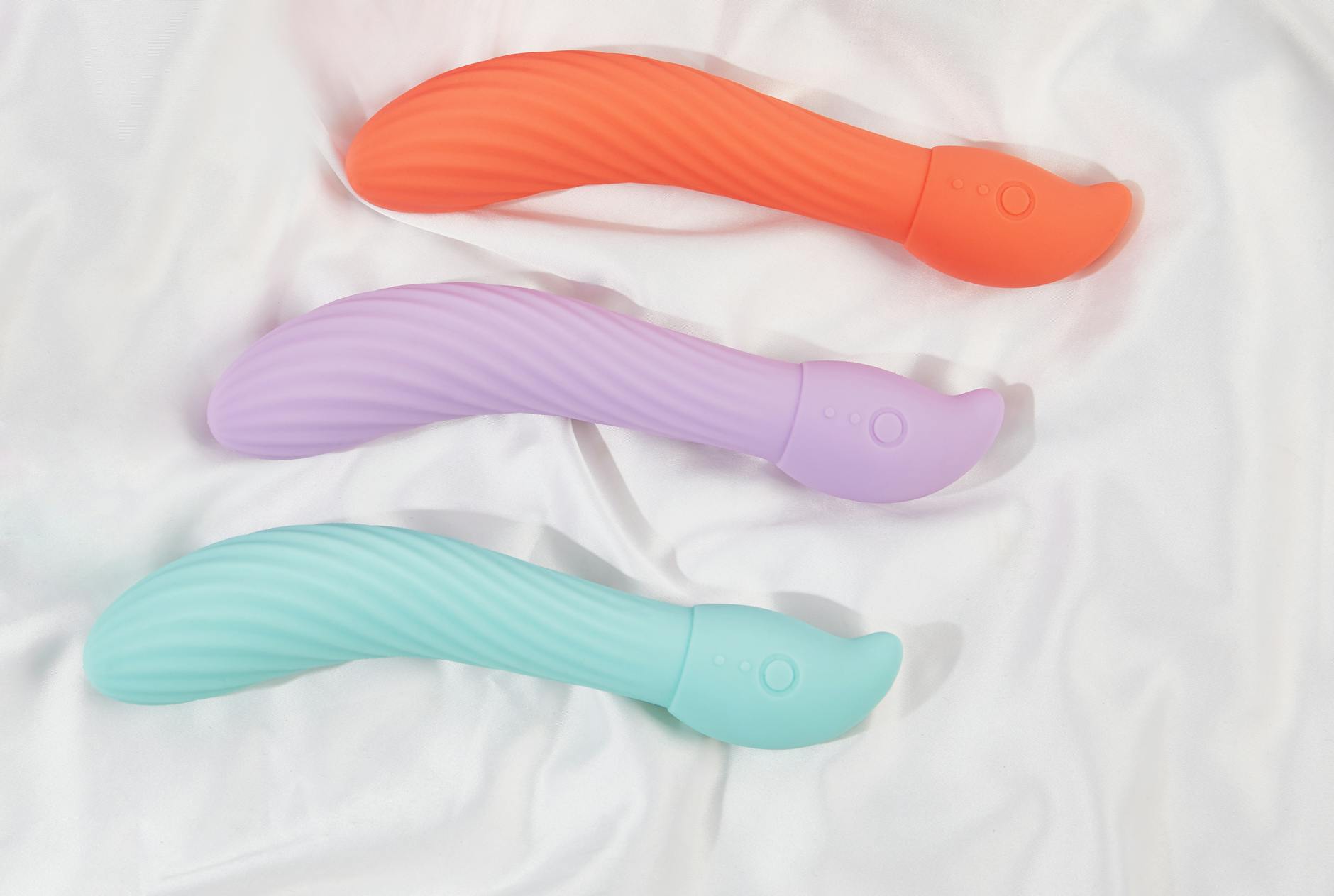
When couples drift, pleasure becomes the conversation you're not having
Most couples don't introduce a toy to fix the sex. They do it because something else broke first. Maybe it was the logistics of kids, jobs, grief. Maybe it was a betrayal that's technically been forgiven but still sits in the room. Maybe it was years of one person's pleasure never being mentioned, and now the silence feels permanent. The sex becomes a symptom, not the problem.
Here's what I've seen repeatedly in my practice. The moment a couple agrees to try something new—a lemon vibrator, a clitoral toy, any shared tool—they're actually agreeing to have a conversation they've been avoiding. "Let's try this together" means "I still want to connect." It means vulnerability. And vulnerability, it turns out, is a prerequisite for rebuilding.
Why lemon vibrators specifically open this door
Let me be direct. A lemon vibrator works differently than a traditional vibrator. The suction mechanism stimulates nerve clusters in a way that doesn't require deep knowledge of anatomy or years of "practice" together. For someone who's been disconnected from their own body due to stress, self-consciousness, or relationship friction, that different sensation can be genuinely revelatory. It makes pleasure feel like discovery instead of routine.
But here's the relational part. When a partner offers to use a lemon clitoral vibrator together, they're saying something specific. Not "I want more sex"—that can land as accusatory. They're saying "I want to understand your body differently. I want to learn how you work now." That shift in framing changes everything.
The act of learning how the toy works, experimenting with patterns and intensity, watching your partner's responses—that's foreplay in the real sense. It's attention. It's curiosity about another person. It's the opposite of going through the motions.
The conversation before the toy
Here's what needs to happen first, and I will not skip this step. You need to talk about why you want to try it.
Not during sex. Not in bed. Sit down, clothed, at a time when you're both rested. One person says something like: "I miss feeling close to you. I'm not sure we're connecting physically anymore, and I want to try something that might help us both relax into it again. Would you be open to exploring this together?"
Notice what's absent from that sentence. No blame. No "you never" or "I'm not satisfied." Instead, it's about the relationship—the "us"—and a genuine, non-defensive request.
Your partner might say yes immediately. They might need time. They might ask questions. All of that is good. Resistance is often just fear of judgment, so hearing "I want to understand you better" can shift that.
If you're the one being asked, your job is to stay curious instead of defensive. "That's interesting to you?" is better than "Why, what's wrong with what we do now?" The goal is information, not protection.
When the lemon vibrator becomes the third person in the conversation
This sounds poetic and it is, but it's also literal. When you introduce a tool, it becomes a focal point. You can talk about the tool instead of talking about the relationship. You can say "That pattern felt good" without it meaning "You never made me feel that way." You can explore intensity together without it becoming evidence of incompatibility.
I recommend starting slow. Not slow in duration—spend 30 to 45 minutes together if you can. Slow in the sense of permission. The receiving partner gets to explore what feels good without pressure to orgasm quickly or perform pleasure. The giving partner gets to pay attention in a way that sex under stress often doesn't allow.
Many couples tell me that using a lemon clitoral vibrator together is the first time in years they've talked openly about sensation, about what feels good or intense or too much. Once you've had that conversation with a toy in your hand, it becomes easier to have it without one.
How to actually introduce it without awkwardness
Some practical steps. First, both partners should know it's coming. Don't surprise someone with a toy. Second, one of you orders it (or you order it together). Let it arrive naturally. Don't make a big deal of the unboxing, but do let your partner see it. Less mystery, less weirdness.
When you're ready to use it, the receiving partner should be comfortable. Warm, rested, not distracted. The toy should be clean (always) and have fresh battery or charge. Start with a medium pattern on the lemon vibrator. Let your partner guide the pace. "Slower" or "that feels good" are complete sentences.
If it doesn't work the first time, that's normal. Intimacy is awkward. Sex sometimes is awkward. The point is you're trying, together, and that matters more than the orgasm.
When lemon vibrators reveal you need something else
Here's the tough honesty. Sometimes a couple tries this and realizes the disconnection goes deeper. Maybe one person has checked out of the relationship. Maybe there's infidelity or financial deception that's never been addressed. Maybe one partner's desire has genuinely shifted and they need to talk about whether you're still compatible.
That's not a failure of the toy. It's actually information. You're learning something true about your relationship, and that matters.
If you hit this point, my recommendation is to work with a couples therapist before trying again. A toy can bridge a small gap. It cannot rebuild a foundation that's been lost. That requires actual conversation, sometimes over months, sometimes with professional guidance.
The intimacy that follows the first time
What many couples don't expect is what happens next. After you've used a lemon clitoral vibrator together, after you've been present and attentive and vulnerable, there's often a tenderness. Not every time, but often. People feel seen. They feel like their pleasure was actually a priority instead of a box to check.
That feeling is permission to have more conversations. "Can we do that again?" opens the door to "Can we also talk about what we've been avoiding?" Pleasure and communication start feeding each other instead of existing in separate lanes.
Some couples find that using a lemon vibrator becomes part of their regular routine. Others try it once and then shift back to other ways of being intimate. Both are fine. The point is you've expanded your language for intimacy and you've reminded each other that you're worth the effort.
When pleasure comes back, so does everything else
I've watched couples in my practice go from not touching for months to laughing during sex again. Not because a toy fixed them. Because introducing a toy meant someone cared enough to try. Someone said "our intimacy matters." Someone was brave enough to feel awkward in service of connection.
A lemon vibrator, a clitoral suction toy, any tool really—it's not magic. But it is permission. Permission to be curious. Permission to ask for what feels good. Permission to think about your partner's pleasure, not as an obligation, but as something genuinely worth understanding.
That permission, it turns out, changes everything.